


Solar Panel Voltage Regulator

Go Power GPPWM30UL 30 Amp PWM Digital Solar Charge Controller with Bluetooth


 Representative Photo, actual item may vary



What Is a Solar Panel Voltage Regulator?
A solar panel voltage regulator — also commonly called a solar charge controller or charge regulator — is one of the most critical components in any battery-based solar power system. Its core job is straightforward but essential: solar panel voltage regulators sit between your solar panels and your battery bank, managing the flow of energy so that your batteries are charged safely, efficiently, and without damage.
Here's why that matters: most "12 volt" solar panels actually put out 16 to 20 volts, far more than the 14 to 14.5 volts a typical lead-acid battery needs to reach a full charge. Without a regulator in the circuit, that excess voltage has nowhere to go — and the result is overcharging, which can shorten battery life dramatically or cause outright battery failure. A quality voltage regulator prevents this by continuously monitoring battery voltage and precisely controlling how much current flows from the panels.
How Solar Voltage Regulators Work
Modern solar charge controllers use one of two primary technologies to regulate power. PWM (Pulse Width Modulation) controllers work by rapidly switching the solar input on and off to maintain a steady battery voltage — a proven, cost-effective approach well suited to smaller systems. MPPT (Maximum Power Point Tracking) controllers are more sophisticated: they continuously adjust to find the optimal operating voltage of the panels and convert excess panel voltage into additional charging current, squeezing more usable energy out of every hour of sunlight. MPPT models tend to be the better choice for larger arrays, higher-voltage panel configurations, and cold-climate installations where maximizing energy harvest is a priority.
Beyond regulating charge, these controllers also protect against reverse current flow at night (which would drain your battery back through the panels), short circuits, high temperatures, and reverse polarity. Some units also feature multi-stage charging profiles — including bulk, absorption, and float stages — to deliver precisely the right charge at each phase of the battery's cycle, extending overall service life.
Where Solar Voltage Regulators Are Used
Solar charge controllers are found in a wide variety of real-world applications. They are an essential component in RV and camper van electrical systems, marine and boat setups, off-grid cabins, farm and ranch remote power installations, and vehicle-based auxiliary battery systems. If your solar panel feeds any kind of battery bank, a properly sized voltage regulator is not optional — it is the safeguard that keeps the entire system running safely over the long term.
Key Considerations When Choosing a Regulator
- Amperage rating: Match the controller's amp rating to your panel array's output current, with some headroom for safety.
- System voltage: Confirm compatibility with your battery bank voltage (12V, 24V, or 48V systems).
- PWM vs. MPPT: PWM works well for smaller, simpler setups; MPPT delivers higher efficiency for larger or more complex arrays.
- Battery type compatibility: Look for controllers with selectable charge profiles for flooded lead-acid, AGM, gel, and lithium battery chemistries.
- Display and monitoring: LCD displays and LED status indicators make it easy to keep tabs on system health at a glance.
Top Brands in Solar Panel Voltage Regulators
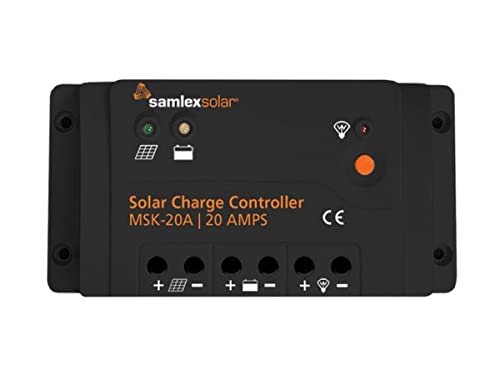
Samlex is a well-regarded name in DC power electronics, offering solar charge controllers designed specifically for RV, marine, and off-grid alternative energy applications. Their controllers feature multi-stage charging, LCD monitoring displays, and compatibility with a wide range of battery types — making them a reliable choice for anyone building or upgrading a solar charging system.