


Rivet Nut








 Representative Photo, actual item may vary

 Representative Photo, actual item may vary

 Representative Photo, actual item may vary



 Representative Photo, actual item may vary

 Representative Photo, actual item may vary
 Representative Photo, actual item may vary
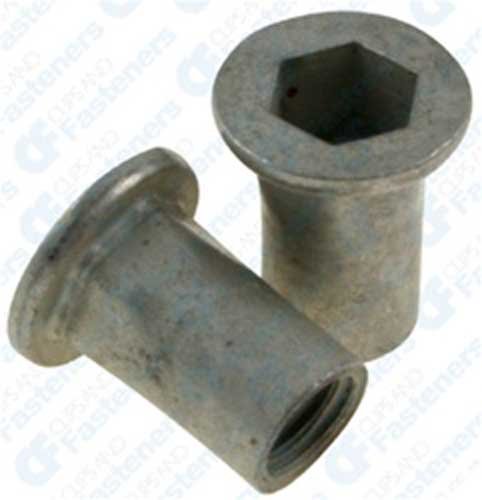 Representative Photo, actual item may vary


Marson 47184 MRN Series Round Body Steel Rivet Nut Insert 3/8-16 UNC-2B Flat Head 20-Pack

 Representative Photo, actual item may vary
 Representative Photo, actual item may vary
 Representative Photo, actual item may vary
 Representative Photo, actual item may vary
 Representative Photo, actual item may vary

 Representative Photo, actual item may vary


 Representative Photo, actual item may vary



What Is a Rivet Nut?
Rivet nuts — also called blind rivet nuts, rivnuts, or nutserts — are one of the most versatile fasteners in automotive repair and fabrication. Rivet nuts are internally threaded, tubular inserts that can be anchored entirely from one side of a workpiece, making them ideal for situations where the back side of a panel or structure is completely inaccessible.
The concept is elegantly simple: the rivet nut is inserted into a pre-drilled hole, and a specialized installation tool pulls on the fastener's internal threads, causing the body to deform and clamp tightly against the rear of the material. The result is a permanent, reusable threaded connection — without welding, tapping, or any access to the blind side.
Why Rivet Nuts Matter in Automotive Work
Modern vehicles rely heavily on rivet nuts throughout their construction. They are used to attach components to dashboards and firewalls, and are installed in the chassis and body to connect radiators, roof racks, spoilers, and plastic fenders. Because they can be applied after a workpiece has already been coated or painted, rivet nuts are especially valuable in both OEM production and aftermarket repair environments — no rework required after finishing.
Unlike weld nuts, rivet nuts introduce no heat into the base material, eliminating distortion and weld spatter. And unlike standard blind rivets, rivet nuts leave behind reusable internal threads that accept bolts and screws, making them the preferred choice whenever a serviceable, removable connection is needed in thin-gauge material.
Choosing the Right Rivet Nut
Not all rivet nuts are created equal. When selecting a fastener, consider these key factors:
- Thread size: Match the rivet nut's thread specification (SAE or metric) to the bolt or screw you plan to use.
- Grip range: The rivet nut must accommodate your material's thickness within its specified grip range for a proper set.
- Material: Steel offers maximum strength for structural use; aluminum saves weight and resists corrosion; stainless steel excels in harsh or outdoor environments; brass provides electrical conductivity.
- Body style: Round-body rivet nuts install quickly and suit most applications. Hex-body designs resist spin-out in high-torque or high-vibration scenarios. Closed-end variants seal out moisture and debris — ideal for exterior vehicle attachment points.
- Installation tool: Manual hand tools suit light-duty and occasional use; lever-style and pneumatic tools are preferred for larger sizes or higher-volume work.
Top Rivet Nut Brands
Marson is the dominant name in rivet nut fasteners and tooling, trusted by manufacturers and OEM-quality repair facilities worldwide. Marson rivet nuts deliver permanent thread placement in thin materials, providing at least six full thread turns per installation, and their extensive tool lineup — from manual hand tools to battery-powered and pneumatic setters — covers every volume and application need.
Astro Tools (Astro Pneumatic) rounds out the category with practical, shop-ready rivet nut installation kits designed for the working technician. Their hand and pneumatic rivet nut setters are available in both SAE and metric configurations, making them a flexible choice for professional shops and serious DIYers alike.