


Structural Adhesive





 Representative Photo, actual item may vary


Weldmount 4020 AT-4020 Acrylic Adhesive 50ml Cartridge for Composite and Plastic Bonding


JB Weld 50139 Plastic Bonder Body Panel Adhesive & Gap Filler, Black, 25 mL Syringe








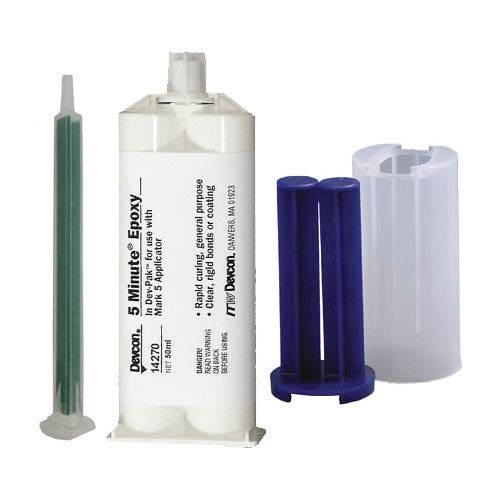 Representative Photo, actual item may vary


 Representative Photo, actual item may vary
Norton 63642504617 Speed Grip Structural Adhesive 15 Minute Two-Part Urethane
 Representative Photo, actual item may vary


PLIOGRIP 8034 Plastic Panel Bonding Adhesive 400mL Two-Part Structural Epoxy for SMC Fiberglass Carbon Fiber


- 1
- 2
What Is Structural Adhesive?
Structural adhesives are high-performance bonding compounds engineered to create permanent, load-bearing joints between two surfaces. Unlike standard contact adhesives or sealants, these formulations are designed to replace or supplement mechanical fasteners — think welds, bolts, rivets, and screws — while distributing stress evenly across an entire bond line. The result is a joint that can be stronger, lighter, and more corrosion-resistant than one made with traditional hardware.
Structural adhesives are typically two-part systems — most commonly epoxy, acrylic, or methacrylate-based — that cure through a chemical reaction between a resin and a hardener. This chemistry gives them their hallmark combination of high tensile strength, shear resistance, impact toughness, and durability across wide temperature ranges.
Why Structural Adhesives Matter
Modern vehicles, boats, and industrial assemblies increasingly rely on structural adhesives because they solve problems that mechanical fasteners simply cannot. When bonding dissimilar materials like aluminum to steel, or metal to fiberglass composites, drilling holes compromises the substrate and creates potential points for water intrusion and galvanic corrosion. Adhesive bonding avoids all of that. As the industry has shifted toward lightweight materials — high-strength steel, aluminum alloys, carbon fiber — structural adhesives have become an essential part of both OEM manufacturing and professional repair work.
Key advantages of structural adhesives include:
- No drilling required — preserves substrate integrity and prevents leak paths on hulls and vehicle panels
- Corrosion resistance — acts as an insulator between dissimilar metals to prevent galvanic corrosion
- Fatigue and vibration resistance — bond lines flex with the assembly rather than concentrating stress at a single point
- Improved NVH performance — stiffens bondlines and reduces noise, vibration, and harshness in vehicle structures
- Multi-material capability — bonds metals, plastics, composites, fiberglass, and wood
Choosing the Right Structural Adhesive
The right product depends on your substrate, working time, cure method, and environment. For collision repair and OEM body panel replacement, an epoxy-based adhesive is often the standard — it delivers high impact strength and lifetime corrosion protection. For marine and industrial installations where drilling into a hull or finished surface is not an option, acrylic and methacrylate systems offer fast set times and superior performance on vertical and overhead surfaces. Always prepare surfaces properly — clean, dry, and abraded substrates are non-negotiable for achieving full bond strength.
Top Structural Adhesive Brands
Weldmount is the go-to choice for adhesive-bonded fastening systems in marine, automotive, and industrial settings. Their proprietary two-part acrylic adhesives are high-viscosity structural methacrylates that hold studs, cable mounts, and standoffs on vertical or overhead surfaces without sagging, eliminating the need to drill into fiberglass, metal, or composite substrates.
3M brings decades of materials science expertise to structural adhesives, offering a broad lineup under the Scotch-Weld and Impact Resistant Structural Adhesive (IRSA) names. Their formulations are trusted by automotive OEMs and collision repair professionals to bond everything from body-in-white steel structures to lightweight aluminum alloy panels.
Fusor (by Parker Lord) has been a staple of professional body shops for over 40 years. Their two-component epoxy-based adhesives are OEM-approved and recommended for weld bonding, rivet bonding, and panel replacement — backed by a lifetime-of-the-vehicle guarantee.