


Synchronous Belts


Gates TP1512-8MGT-20 PowerGrip GT2 Twin Power Synchronous Belt - 1512mm Length, 8mm Pitch, 20mm Width

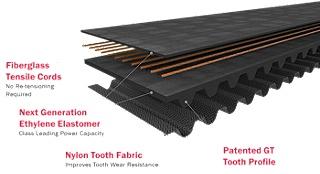 Representative Photo, actual item may vary


Primex 464569 Logmonster LS-2 18.4-30 Forestry Skidder Tire, 16 Ply, Load Range H


Gates 1610-14MGT-85 PowerGrip GT4 Synchronous Timing Belt 14mm Pitch 85mm Wide

What Are Synchronous Belts?
Synchronous belts — commonly known as timing belts — are one of the most critical underhood components in any engine-equipped vehicle. Synchronous belts feature precisely molded teeth on their inner surface that mesh with matching grooves on pulleys or sprockets, creating what engineers call a positive drive: a slip-free, mechanically locked connection between rotating shafts. Unlike conventional V-belts that rely on friction, synchronous belts deliver exact, predetermined motion every single revolution.
Why Synchronous Belts Matter
In an automotive engine, the synchronous belt most often serves as the timing belt — the component responsible for keeping the crankshaft and camshaft(s) perfectly synchronized. This coordination controls when the engine's intake and exhaust valves open and close relative to piston position. Even a small loss of synchronization can cause misfires, a drop in power, or in interference-style engines, catastrophic valve-to-piston contact. Because there is no slippage and no metal-to-metal contact in a properly functioning synchronous belt drive, lubrication is not required, making these systems inherently clean and low-maintenance.
Beyond engine timing, synchronous belts are also found driving accessory systems, balance shafts, oil pumps, and other precision underhood components. Their ability to maintain a constant, exact speed ratio between drive and driven shafts makes them the go-to solution anywhere timing accuracy is non-negotiable.
Key Characteristics of a Quality Synchronous Belt
- Tooth profile: Trapezoidal, HTD (High Torque Drive), and curvilinear profiles each suit different load and speed requirements. Match the belt tooth profile to the pulley it will engage.
- Tensile cord material: Fiberglass and aramid cords resist elongation under load, keeping teeth in mesh and timing accurate over time.
- Rubber or polyurethane construction: HNBR (hydrogenated nitrile butadiene rubber) offers superior heat and contamination resistance in demanding automotive environments.
- Correct tension: Proper installation tension is critical — too loose and the belt skips teeth; too tight and bearing loads increase, shortening belt and pulley life.
- Service interval: Always follow the vehicle manufacturer's recommended replacement interval. A worn or cracked timing belt rarely gives advance warning before it fails.
Top Brands in Synchronous Belts
Gates is one of the most recognized names in synchronous belt technology, with a product line spanning automotive timing applications and beyond. Gates engineers their timing belts with PTFE-infused jackets to reduce friction and tooth shear, and HNBR rubber for superior heat and contamination resistance, targeting OE fit for virtually every vehicle on the road.
Primex rounds out the synchronous belt selection as a value-oriented option for shoppers seeking dependable replacement belt coverage without compromising on basic performance specifications.