


Airflow Sensor




 Representative Photo, actual item may vary

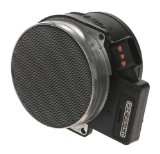 Representative Photo, actual item may vary
 Representative Photo, actual item may vary





 Representative Photo, actual item may vary

What Is an Airflow Sensor and Why Does It Matter?
Airflow sensors — most commonly known as Mass Air Flow (MAF) sensors — are among the most critical components in a modern fuel-injected engine. Airflow sensors sit between the air filter and the intake plenum, where they continuously measure the mass of air entering the engine and report that data to the Engine Control Unit (ECU) or Powertrain Control Module (PCM). The ECU then uses this information to calculate precisely how much fuel to deliver, keeping the air-fuel mixture at its optimal ratio for clean combustion and maximum efficiency.
Unlike a simple volume measurement, a MAF sensor accounts for variations in air density caused by changes in temperature, barometric pressure, and altitude. Most modern hot-wire MAF sensors work by passing an electrically heated wire into the incoming airstream; as airflow increases and cools the wire, more current is required to maintain its temperature, and that current draw is proportional to the mass of air flowing through. A small onboard chip converts this analog signal into a digital reading that the ECU can act on in real time.
Beyond fueling, the PCM also uses airflow readings to determine automatic transmission shift points — so a faulty sensor can affect not just fuel economy but overall drivability. Common symptoms of a failing MAF sensor include rough idle, hesitation during acceleration, poor fuel economy, engine stalling, and an illuminated check engine light. In many cases, contamination from dust or excess oil from an aftermarket air filter is the culprit, though physical damage or age can also cause failure.
What to Consider When Shopping for an Airflow Sensor
- OE Fit & Compatibility: Always verify the sensor matches your exact vehicle year, make, model, and engine. MAF sensors are precisely calibrated to a specific engine's intake geometry and ECU software.
- New vs. Remanufactured: Remanufactured units from reputable brands are rigorously tested to OE output specifications and can offer solid value; new sensors from OEM-affiliated brands provide factory-fresh reliability.
- Quality of Materials: Sensors must withstand extreme heat and cold cycles. Look for units built with automotive-grade materials and 100% electrical testing before shipping.
- Brand Reputation: Stick with established names that have documented testing protocols and a track record with your vehicle's manufacturer.
Top Airflow Sensor Brands
Mopar Performance is the factory-direct source for Chrysler, Dodge, Jeep, and Ram vehicles. Mopar parts are engineered specifically for FCA platforms, making them the benchmark for fit and calibration accuracy on those applications.
Cardone is a leader in remanufactured automotive components. Cardone MAF sensors are 100% tested with automated computer equipment to track OE output curves and maintain spec tolerances, ensuring accurate feedback to the ECU and scan tool readings.
Bremi is a German-founded OEM and aftermarket supplier with roots going back to 1927. Bremi MAF sensors are manufactured to ISO/TS 16949 standards and 100% tested, with a particular focus on European platforms like BMW, Audi, and Volkswagen.
ACDelco brings the engineering heritage of General Motors to the aftermarket. ACDelco sensors are developed to match GM vehicle specifications and are a trusted choice for owners of Chevrolet, Buick, GMC, and Cadillac models.
Hella is a globally respected German automotive supplier with deep OEM partnerships across European and domestic manufacturers. Hella airflow sensors are engineered with precision measurement technology and are widely recognized for durability in demanding conditions.