


Engine Water Pump Assembly


US Motor Works MCK1050 Water Pump and Fan Clutch Max Cooling Kit


GMB North America 130-7340AT Water Pump Assembly with Thermostat and Housing

 Representative Photo, actual item may vary



 Representative Photo, actual item may vary



 Representative Photo, actual item may vary

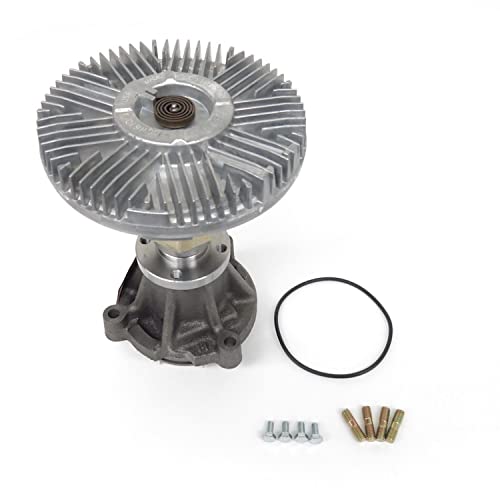 Representative Photo, actual item may vary


US Motor Works MCK1076-TU Water Pump and Fan Clutch Assembly with Heater Return Tube

US Motor Works MCK1055-T Water Pump and Fan Clutch Assembly Max Cooling Kit
 Representative Photo, actual item may vary

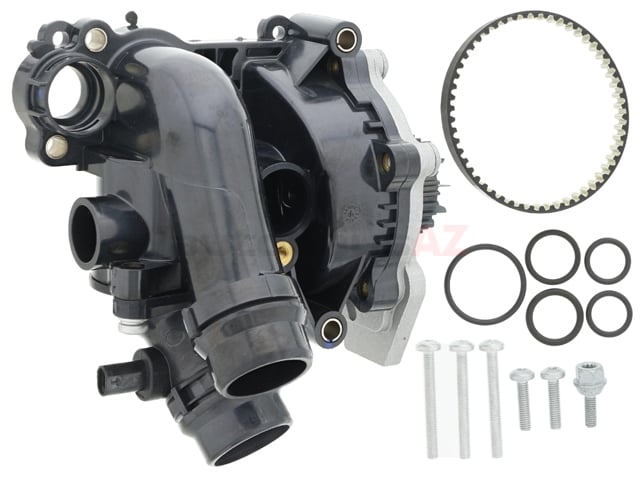 Representative Photo, actual item may vary
 Representative Photo, actual item may vary


- 1
- 2
What Is an Engine Water Pump Assembly?
The water pump is the heart of your engine's cooling system. Engine water pump assemblies are responsible for one critical job: keeping coolant in constant motion through your engine, radiator, and heater core. Without a functioning water pump, coolant becomes stagnant and your engine can overheat in a matter of minutes — leading to potential breakdowns and costly repairs.
Here's how it works: when the engine starts, the crankshaft turns the drive belt, which spins the pump pulley. This motion drives the impeller inside the pump housing, pushing coolant out of the pump and through the engine block. The coolant absorbs heat as it flows around the cylinders and combustion chambers, then carries that heat to the radiator where it is released into the atmosphere. From there, it loops back to the pump and the cycle begins again — continuously, for as long as the engine runs.
Key Components of a Water Pump Assembly
A complete water pump assembly brings together several precision-engineered parts that must work in harmony:
- Impeller: The rotating fan-like component that creates the pressure and flow needed to circulate coolant through the system. Impeller design — metal vs. resin, blade count, and angle — directly affects cooling efficiency.
- Housing: Typically cast from aluminum, cast iron, or composite materials, the housing contains all internal components and mounts directly to the engine block.
- Shaft and Bearings: Connect the impeller to the drive pulley and allow it to spin smoothly. Bearing failure is one of the most common causes of water pump wear, often resulting in leaks or shaft wobble.
- Seal and Gasket: Prevent coolant from escaping around the shaft and housing. These are among the first components to degrade over time.
- Pulley: Transfers motion from the engine's serpentine belt or timing belt to the pump shaft.
Why Water Pump Replacement Matters
Water pump failure doesn't just mean an overheating gauge — it can trigger catastrophic engine damage. On engines where the water pump is driven by the timing belt, a seized pump can cause the belt to break suddenly, potentially resulting in bent valves or damaged pistons. That's why many mechanics recommend replacing the water pump at the same time as a timing belt service: you're already deep into the engine, and the incremental cost of the part is far less than a return labor visit.
Common signs of a failing water pump include abnormally high engine temperatures, coolant loss, rattling or whining noises near the front of the engine, and coolant seeping from the weep hole beneath the pump pulley. If you notice any of these symptoms, prompt replacement is essential.
Choosing the Right Engine Water Pump Assembly
When shopping for a replacement, fit and quality are paramount. An assembly that matches your vehicle's original equipment (OE) specifications ensures proper flow rates, correct mounting geometry, and long-term reliability. Look for assemblies that include all necessary gaskets and seals to simplify the installation and eliminate the need for additional sourcing.
For foreign nameplate vehicles — including European and Asian makes — Beck/Arnley engine water pump assemblies are a well-regarded choice among import specialists. Beck/Arnley works with a network of global sourcing partners to deliver parts that meet OE form, fit, and function requirements, with heavy-duty steel bearings that are sealed and lubricated for life.