


Trailer Coupler


Husky Towing 87076 Straight Tongue Trailer Coupler 3" Channel 6000 lb Capacity 2" Ball


Husky Towing 87071 Straight Bolt-On Trailer Coupler 2-1/2" Channel Mount 2000 lbs 1-7/8" Ball

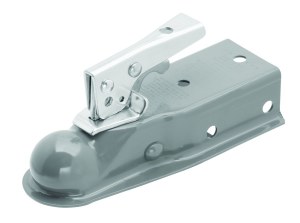 Representative Photo, actual item may vary
Cequent Performance 11250 0101 Straight Tongue Trailer Coupler 1-7/8" Ball 2-1/2" Channel Zinc


Husky Towing 87072 Straight Trailer Coupler 1-7/8" Ball 3" Channel 2,000 lb GTW Bolt-On



Husky Towing 87074 Straight Tongue Trailer Coupler 2-1/2" Channel Mount 3500 lbs 2" Ball


 Representative Photo, actual item may vary

 Representative Photo, actual item may vary

 Representative Photo, actual item may vary
 Representative Photo, actual item may vary
 Representative Photo, actual item may vary
 Representative Photo, actual item may vary

What Is a Trailer Coupler and Why Does It Matter?
The trailer coupler is the single most critical link between your trailer and tow vehicle. Trailer couplers are mounted to the front of the trailer tongue and clamp securely over the hitch ball on your tow vehicle, forming the connection that bears the full load during travel. As one industry source puts it, the coupler "locks your trailer to your tow vehicle’s hitch ball, creating the secure connection that carries weight, absorbs motion, and keeps your setup from separating during turns, stops, and highway speeds." In short, no other component on your trailer has more riding on it.
Choosing the Right Coupler: Key Considerations
Not all couplers are interchangeable. Getting the fit right comes down to three main factors:
- Ball Size: The coupler must match the diameter of the hitch ball exactly. Common sizes are 1-7/8" for light-duty trailers, 2" for most mid-size applications, and 2-5/16" for heavy-duty haulers. A mismatched size can cause the connection to loosen or fail entirely.
- Tongue Style: Straight-tongue couplers bolt or weld onto square or rectangular trailer frames and offer simplicity for everyday towing. A-frame couplers feature a triangular design better suited to large, heavy trailers that need additional support and stability. Gooseneck couplers are engineered for heavy-duty towing, mounting inside the bed of a pickup truck, and can handle loads from 20,000 to 40,000 pounds depending on the system.
- Latch Mechanism: Posi-lock latches are the most common type, widely used on utility and boat trailers of small to medium size. Sleeve-lock latches prioritize a more secure connection, while automatic self-locking designs reduce user error and speed up hook-ups. Each style has its trade-offs in ease of use and security.
It’s equally important to match the coupler’s weight rating to your trailer’s Gross Trailer Weight Rating (GTWR). Every component in the chain — receiver, ball mount, hitch ball, and coupler — must meet or exceed your load’s demands. Mixing classes is a safety hazard, not just a performance issue.
Top Trailer Coupler Brands
Bulldog is one of the most recognized names in the coupler category. Founded in 1920, Bulldog’s line of trailer couplers and Wedge-Latch™ elements has become an industry standard for agricultural, military, and heavy-duty applications. Their Collar-Lok A-frame and adjustable gooseneck couplers span a wide range of capacities and tongue configurations, making them a go-to for demanding towing environments.
Husky Towing produces a broad lineup of trailer couplers designed to cover trailers of all types and weight capacities. Their A-frame couplers are built to be welded to 50-degree A-frame tongues and are rated for SAE Class III, IV, and V applications, while their straight-tongue couplers are tested and certified to VESC V-5 and SAE J684 standards — a reassuring mark of quality for safety-conscious builders and operators.
Demco Trailer brings specialized towing expertise to the coupler market, offering solutions particularly well regarded for RV and fifth-wheel towing applications where fit and reliability are paramount.
Blue Ox is a trusted name in the towing industry, known for engineering precision towing components. Their coupler offerings complement their broader lineup of hitch systems designed for motorhome and recreational towing.
Fulton Performance rounds out the category with trailer couplers aimed at marine and utility trailer applications, where corrosion resistance and consistent latching are especially important in harsh environments.
Installation Tips
Couplers are either welded or bolted onto trailer frames depending on the style. Always verify that the latch closes fully and that there is zero lift or play after latching — any movement signals a mismatch or wear that needs to be addressed before towing. Keeping the coupler latch mechanism clean and lubricated also extends service life and ensures reliable operation trip after trip.