


Watts Link


BMR Suspension WAK360R Caster Camber Plates for Factory Springs


 Representative Photo, actual item may vary
BMR Suspension WL005R Body Mount Watts Link with Rod End and Polyurethane Bushings Red


BMR Suspension WL006H Watts Link Body Mount Rod End Adjustable Axle Clamps Mustang

BMR Suspension WL005H Body Mount Watts Link Rod End/Polyurethane Adjustable Black Hammertone

Whiteline W81274 Watts Link Pivot Bushing Kit - Rear Axle Center



BMR Suspension WAK331H Caster Camber Plates with Lockout Plates

BMR Suspension WAK331R Caster Camber Plates with Lockout Plates for GM F-Body




BMR Suspension WAK731R Caster camber plates Red 1982-1992 Fox Mustang


UMI Performance 2080-300-R Watts Link Rear Suspension Lateral Locator with Roll Center Adjustment


UMI Performance 2080-300-B Watts Link for 3rd & 4th Gen F-Body

UMI Performance 2080-275-R Watts Link with 2.5" Roll Center Adjustment - Red Powder Coat

UMI Performance 2080-275-B Watts Link Rear Suspension Lateral Locator for F-Body



 Representative Photo, actual item may vary


 Representative Photo, actual item may vary

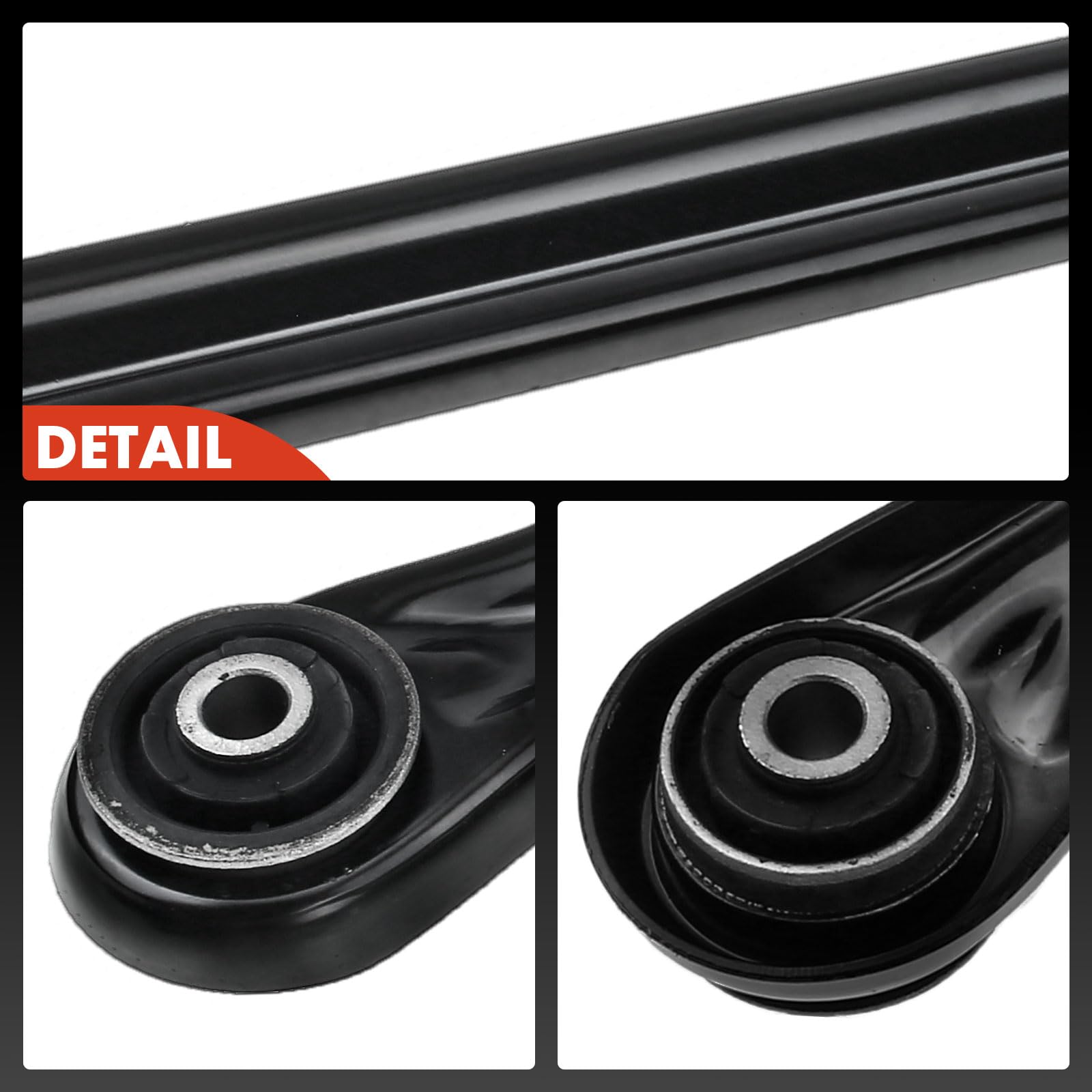 Representative Photo, actual item may vary
What Is a Watts Link?
The Watts link is one of the most elegant solutions in automotive suspension engineering — and its origins trace back centuries. Watts link components are part of the rear suspension system, and their primary job is deceptively simple: keep the rear axle centered under the vehicle while allowing the suspension to travel freely up and down. What makes this mechanism remarkable is the way it achieves that goal without the compromises of a traditional Panhard bar.
Dorman, Moog Chassis Parts, and BMR Suspension all offer Watts link solutions — but they serve meaningfully different needs, from factory replacement to all-out performance upgrades.
How a Watts Link Works
A Watts linkage consists of three connected bars forming a chain: two equal-length outer bars and a shorter middle bar, all able to pivot at their joints. The result is that the central moving point — attached to the rear axle — is constrained to travel in a nearly straight vertical path rather than a lateral arc. As the vehicle body rises and falls over bumps and through corners, the pivot point rotates to compensate, keeping the differential perfectly centered under the car throughout the suspension's entire range of motion.
This stands in direct contrast to a Panhard rod, which forces the rear axle through a lateral arc as the suspension compresses or extends. That arc causes the chassis to shift sideways relative to the tire footprint — a phenomenon that can produce an unstable, "rear steer" sensation. By eliminating virtually all lateral axle movement, a Watts link makes the rear end more predictable and sure-footed, whether you're navigating a winding road, clipping an autocross cone, or launching down a drag strip.
Why Watts Links Matter for Your Build
For most daily drivers on stock suspension, a Watts link quietly does its job in the background. But when a factory unit wears out — its bushings degrade, the bell crank develops play, or the pivot seizes — the rear end can take on that vague, wandering character that's easy to feel but hard to diagnose. Replacing a worn Watts link restores the precise lateral location the suspension was originally designed to provide.
For performance-oriented builds, upgrading to an adjustable aftermarket Watts link can sharpen handling by dialing in rear roll center height and eliminating the compliance that rubber OEM bushings introduce. This is especially valuable on track-prepped or lowered vehicles where suspension geometry has shifted from the factory baseline.
Top Watts Link Brands
Dorman is a go-to source for OE-replacement Watts link components covering a wide range of domestic vehicles. Their parts are precision-engineered as direct-fit replacements for vehicles like the Chrysler PT Cruiser and select Ford and Lincoln models, making them a reliable, straightforward solution for restoring original suspension function.
Moog Chassis Parts brings its well-earned reputation in chassis and suspension components to the Watts link segment, offering replacement units for popular platforms such as the Chrysler PT Cruiser. Moog's focus on problem-solving engineering means their parts are built to meet or exceed original equipment specifications.
BMR Suspension caters to the performance crowd. Their bolt-in Watts link kits are engineered for street performance, drag race, and road race applications — requiring no cutting or modification to the chassis. BMR builds their kits from heavy-duty rectangular or DOM steel tubing and laser-cut steel plate, with double-shear link mounts and greasable Delrin center pivots for bind-free movement and maximum strength. Their lineup spans popular American muscle platforms including the Ford Mustang and GM F-body.
What to Consider When Shopping
- OE Replacement vs. Performance Upgrade: If your factory Watts link has failed, a direct-fit replacement from Dorman or Moog is a cost-effective, proven solution. If you're building for the track or autocross, an adjustable performance kit from BMR offers significant handling gains.
- Bushing Material: Factory-style rubber bushings absorb NVH but introduce compliance. Polyurethane and rod-end (heim joint) options offer greater precision at the cost of slightly increased harshness — a worthwhile trade for serious drivers.
- Adjustability: Some performance Watts links allow the center pivot height to be repositioned, letting you fine-tune rear roll center for your specific ride height and application.
- Vehicle Fitment: Watts links are found on a specific range of vehicles — most notably the Chrysler PT Cruiser, select Ford/Lincoln/Mercury models, and the Ford Mustang. Always confirm fitment before ordering.