


Ignition Contact Set and Condenser Kit







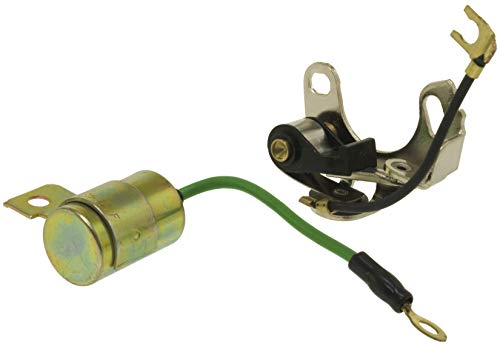 Representative Photo, actual item may vary


What Is an Ignition Contact Set and Condenser Kit?
Long before modern engine management systems took over, virtually every gasoline-powered vehicle relied on a mechanically timed, points-based ignition system. At the heart of that system sat two small but critical components: the ignition contact set (commonly called "points") and the condenser. Together, they govern the precise moment the ignition coil fires, sending a high-voltage spark to the plugs that ignites the fuel-air mixture in each cylinder.
Ignition contact set and condenser kits bundle both components together — and for good reason. Standard Motor Products enthusiasts and classic car forum veterans alike agree: the points and condenser are designed to work as a matched pair. A failing condenser will cause a brand-new set of points to burn out very quickly, so replacing them together every time is the correct approach.
How the System Works
The contact set is a mechanical switch mounted inside the distributor. As the engine turns, a cam on the distributor shaft opens and closes these contacts in precise sequence. This action triggers the ignition coil to collapse its magnetic field and release a burst of high-voltage electricity toward the appropriate spark plug.
The condenser plays an equally important protective role. It is a small capacitor connected directly to the points. Its job is to absorb excess voltage, preventing a damaging arc from forming across the contact faces as they open. This ensures a clean electrical signal, promotes a hotter spark at the plug, and extends the service life of the points themselves.
Over time and miles, the rubbing block on the points wears down from constant contact with the distributor cam, and the electrical contact faces can pit or burn from repeated arcing. These are normal wear patterns, but left unaddressed they lead to hard starting, rough idle, misfires, stalling, and eventually a no-start condition.
When to Replace Your Points and Condenser
On a vehicle with a points-style ignition, the contact set and condenser are routine maintenance items — not emergency repairs. Most mechanics and restoration specialists recommend replacing them as part of a tune-up. Setting the correct point gap with a feeler gauge and verifying dwell angle are key steps after installation to ensure the ignition timing is dialed in properly.
Brands to Trust
Standard Motor Products (SMP) is one of the most recognized names in ignition replacement parts. Established in 1919, SMP has built a long track record supplying the automotive aftermarket with ignition components for domestic vehicles. Their Blue Streak line has historically been regarded as a premium option, and their Standard Ignition products are widely recommended for American-built classics where OEM parts are no longer manufactured.
Accel takes a performance-focused approach to contact sets and condensers. Their points feature extra-thick contact arms engineered to resist flexing at high RPM, large radiused tungsten contacts for crisp circuit-breaking, and heavy-duty springs that resist point float well into the rev range. Accel's performance condensers use Mylar foil windings and moisture-proof Buna-N seals to protect against points pitting and ensure long-term reliability — making them a favorite among muscle car and hot rod builders.
Wells rounds out the lineup as a dependable aftermarket supplier with a focus on quality ignition components. Wells has earned a reputation among professional technicians for consistent fit and function across a wide range of domestic vehicle applications.
Choosing the Right Kit
- OEM Replacement vs. Performance: For a stock classic car driven occasionally, an OEM-spec kit from Standard Motor Products is a logical choice. For a street machine or weekend racer that sees higher engine speeds, Accel's performance-grade kits offer additional durability and output.
- Always Replace as a Set: Never replace points without also replacing the condenser — a worn condenser will rapidly destroy new contact faces.
- Verify the Point Gap: After installation, always set the point gap to spec using a feeler gauge, and confirm dwell angle with a dwell meter for the most accurate timing.
- Consider Your Goals: If you want to eliminate periodic points maintenance entirely, an electronic ignition conversion module that fits inside your stock distributor is a popular upgrade — but for originality or budget-minded restoration, a quality points-and-condenser kit remains the correct, proven solution.