


Quarter-Turn Fastener


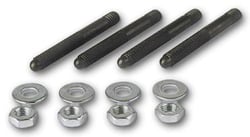
Allstar Performance 19241 Winged Head Quick Turn Fasteners 7/16 x 0.500 in Steel 10pk







- 1
- 2
What Are Quarter-Turn Fasteners?
Quarter-turn fasteners — also known as Dzus fasteners, quick-release fasteners, or panel fasteners — are one of the most practical pieces of hardware a racer or builder can put on a car. The concept is elegantly simple: quarter-turn fasteners consist of a stud, a receptacle, and a spring element that work together to lock two panels securely in place with just a 90-degree rotation of the stud. Tighten or release with a single twist — no wrenches, no fumbling with bolts under pressure.
The design has roots going back to the early 1930s, when the concept was developed to secure aircraft panels that needed to be accessed quickly for maintenance. The military and aviation industries adopted it for its reliable self-locking strength under high vibration, and motorsport followed not long after. Today, quarter-turn fasteners are the standard fastening solution across drag racing, circle track, road racing, sprint cars, and street rod applications.
How They Work
The mechanics behind the fastener are straightforward. A spring-loaded stud is inserted through the outer panel and into a receptacle (typically riveted or welded to the chassis or inner panel). Rotating the stud approximately 90 degrees causes the cross-pin to ride up the cam and compress the spring, creating a firm, controlled preload that locks the assembly in place. A positive mechanical stop prevents over-rotation, and the spring tension keeps the fastener rattle-free even under heavy vibration.
Because the spring is part of the assembly, self-ejecting versions hold the button captive so it cannot be dropped or lost during a pit stop — a critical advantage when seconds count. The quarter-turn mechanism works equally well on sheet metal, Lexan, fiberglass, and carbon fiber, making it a go-to solution for hoods, noses, body panels, access panels, hood scoops, undertrays, and interior firewalls.
What to Consider When Buying Quarter-Turn Fasteners
- Shank length and diameter: Match the fastener shank to the thickness of the panel material being secured. Common diameters are 5/16" (#5) and 7/16" (#6), with shank lengths typically ranging from 0.400" to 0.650".
- Head style: Flush hex, dome slotted, oval, and winged (butterfly) heads are the most common. Flush heads provide a clean, aerodynamic look; dome and oval heads are easier to grab by hand; winged heads allow tool-free removal.
- Material and finish: Aluminum fasteners save weight; steel fasteners offer maximum strength. Finishes include natural aluminum, black anodized, black powder coat, cadmium plated, and chrome — so appearance and corrosion resistance can be matched to the build.
- Spring type: The receptacle spring (commonly an "S"-spring or wire-form spring) is just as important as the button. Match spring size to the fastener diameter for proper preload and retention.
- Complete sets vs. components: Fasteners can be purchased as complete kits (button, spring, and mounting plate/weld plate) or as individual components for replacing worn springs, plates, or buttons separately.
Top Brands in Quarter-Turn Fasteners
Drag Race Solutions is a go-to source for racers who demand precision-machined hardware made in the USA. Their lineup of DZUS-style fasteners is offered in billet aluminum and steel across multiple head styles — including Allen hex and slotted — with finish choices ranging from black anodized and black powder coat to silver cadmium plated and chrome. Drag Race Solutions rounds out the system with matching mounting plates, springs, tools, and washers so builders can source an entire fastener system from one trusted brand.
Allstar Performance brings the depth of a full racing hardware catalog to the quarter-turn category. Their quick-turn lineup spans oval head, flush head, winged head, and self-ejecting button fasteners in both steel and aluminum, available in sets of 10 or 50. Allstar also offers complete starter kits — ideal for first-time builders — along with replacement springs, weld-on and rivet-on mounting brackets, and specialty installation tools, making it easy to outfit an entire race car from a single brand.