


Ammeter


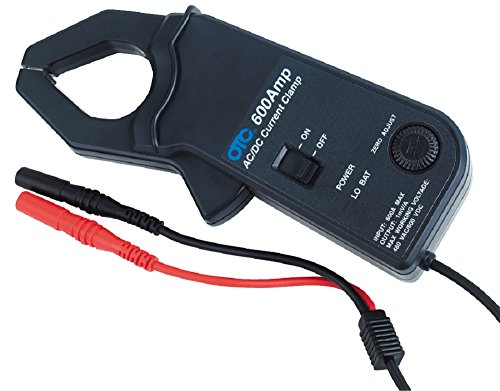 Representative Photo, actual item may vary

 Representative Photo, actual item may vary

What Is an Ammeter and Why Does It Matter?
An ammeter is one of the most fundamental instruments in any electrician's, technician's, or mechanic's toolkit. Ammeters measure the flow of electrical current through a circuit, expressed in amperes (amps) — giving you the real-time data you need to diagnose electrical faults, verify system performance, and prevent dangerous overloads. Whether you're tracing a parasitic draw in a vehicle's electrical system, commissioning a new industrial installation, or troubleshooting a piece of equipment that just won't cooperate, an ammeter tells you exactly how much current is moving and where.
How Ammeters Work
Traditional ammeters are wired directly into a circuit in series, allowing them to capture current flow precisely. Modern clamp-style ammeters — often called clamp meters or clamp-on ammeters — take a different approach: their hinged jaw clamps around a conductor without ever breaking the circuit. This non-contact method makes them far safer and faster to use, especially in tight spaces or live panels where direct wiring is impractical.
Clamp meters come in several varieties to suit different applications:
- Current Transformer (AC) clamp meters — ideal for measuring alternating current in standard commercial and residential wiring
- Hall Effect (AC/DC) clamp meters — capable of measuring both AC and DC currents, making them indispensable for automotive and battery-powered system diagnostics
- Flexible (AC) clamp meters — designed for oversized conductors or bus bars where rigid jaws won't fit
Key Considerations When Choosing an Ammeter
Not all ammeters are created equal. When selecting the right tool, keep these factors in mind:
- Current range: Make sure the meter covers the amperage levels you'll encounter — from milliamp-level automotive circuits to hundreds of amps in industrial settings
- True RMS vs. average sensing: True RMS meters give accurate readings on non-linear loads and distorted waveforms — critical when working on modern electronics or variable-frequency drives
- Safety ratings: Look for CAT III or CAT IV ratings, which indicate the meter is designed to withstand transient voltage spikes in higher-energy environments
- AC vs. DC capability: Automotive and battery systems require DC current measurement; ensure your meter supports both if needed
- Additional functions: Many clamp meters double as multimeters, also measuring voltage, resistance, continuity, temperature, and frequency — reducing the number of tools you need to carry
Top Brands in Ammeters
When it comes to electrical test and measurement tools, few names carry more weight than Fluke. Founded in 1948, Fluke has grown into the world leader in compact professional test and measurement equipment, earning a reputation built on portability, ruggedness, safety, and ease of use. Their clamp meter lineup spans everything from compact, single-function AC ammeters to full-featured True RMS models capable of measuring AC and DC current, voltage, resistance, temperature, and more — all in one ergonomic package trusted by electricians, engineers, and field technicians worldwide.