


Differential Race
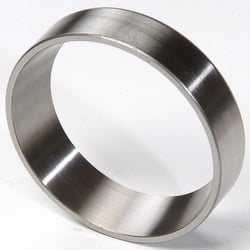



 Representative Photo, actual item may vary


 Representative Photo, actual item may vary

 Representative Photo, actual item may vary
What Is a Differential Race?
A differential race — also called a differential bearing race or bearing cup — is a precisely machined ring that works in tandem with a tapered roller bearing inside your vehicle's differential. The race provides the smooth, hardened contact surface that the bearing rollers ride against, enabling the differential's internal components to rotate with minimal friction and maximum load-bearing capacity. Without a properly functioning race, bearings cannot do their job, leading to accelerated wear and eventual driveline failure.
To understand why this small component matters so much, it helps to appreciate what the differential does. The differential transfers power from the transmission and driveshaft to the wheels, while allowing each wheel to rotate at a different speed during cornering — a critical function that protects tires, improves handling, and maintains traction. Inside that housing, carrier bearings and pinion bearings are supported by their respective races. If those races wear out or become damaged, the whole system suffers.
How Differential Races Wear Out
Differential bearing races are machined to extremely tight tolerances from the factory, but they are not immune to wear. Contaminated or low gear oil is one of the most common culprits — abrasive particles suspended in degraded fluid act like sandpaper against the polished race surface. Over time, this leads to pitting, spalling, or scoring on the contact surface. Drivers often notice the first signs of a failing race as a rumbling, whirring, or grinding noise from beneath the vehicle, which may intensify or shift character during turns as load is transferred across the differential.
Because the race and its mating bearing wear together, it is strongly recommended to replace both components as a matched set whenever you perform a differential rebuild or ring-and-pinion gear swap. Installing a new bearing against a worn race — or vice versa — compromises the precision fit and shortens the lifespan of both parts considerably.
What to Look for When Shopping Differential Races
- OE fitment: Confirm the race matches the original equipment dimensions — outside diameter, inside diameter, and cup width — for your specific differential housing.
- Material quality: High-grade steel with controlled heat treatment ensures the surface hardness needed to resist pitting and fatigue under load.
- Surface finish: Tighter surface tolerances translate directly to lower friction, reduced noise, and longer service intervals.
- Matched sets: Purchasing the race and cone bearing together as a set guarantees compatibility and simplifies installation.
Top Brands for Differential Races
When it comes to differential races, Timken Bearings stands as the benchmark choice for professional technicians and serious enthusiasts alike. Timken devotes great attention to precise control of chemistry, dimensional tolerance, and surface quality — all crucial factors in manufacturing these critical load-bearing components. With a catalog that covers the vast majority of domestic and import vehicles, Timken differential races are engineered to meet and exceed OE specifications, making them a trusted choice for both routine maintenance and performance-oriented differential builds.