


2008 Chevrolet Impala A/C Accumulator / Receiver Drier


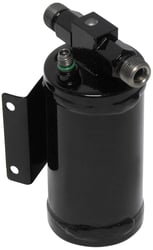





What Is an A/C Accumulator or Receiver Drier?
Every automotive air conditioning system depends on one critical component to protect it from moisture, debris, and refrigerant imbalances: either an A/C accumulator or a receiver drier. Though they share the same fundamental purpose, these two parts are not interchangeable — the design of your vehicle's A/C system determines which one it uses.
A/C accumulators are found in systems that use a fixed orifice tube to meter refrigerant flow. Positioned on the low-pressure (suction) side of the system — between the evaporator and the compressor — the accumulator captures any liquid refrigerant before it can reach and damage the compressor, while simultaneously absorbing moisture with an internal desiccant. A/C receiver driers, on the other hand, are used in systems equipped with a thermostatic expansion valve (TXV). Mounted on the high-pressure side between the condenser and the expansion valve, the receiver drier stores excess liquid refrigerant and filters out contaminants and moisture before refrigerant enters the expansion device.
Both components contain a desiccant material that attracts and traps moisture. Over time, that desiccant becomes saturated and loses effectiveness — which is why it is considered best practice to replace the accumulator or receiver drier any time the A/C system is opened for service, such as when replacing a compressor or condenser.
Subcategories: Finding the Right Part
This category covers a full range of moisture-control components for automotive A/C systems. Browse by type to find the exact part for your application:
- A/C Accumulators — Standard replacement accumulators for orifice-tube-based systems.
- A/C Receiver Driers — For TXV-based systems; acts as a liquid reservoir and filter.
- Universal Tank Accumulators — Flexible-fit accumulators designed for custom or retrofit A/C installations.
- A/C Accumulators with Hose Assembly — Convenient all-in-one units that include the connecting hose for streamlined replacement.
- A/C Receiver Drier / Desiccant Elements — Replacement desiccant elements for systems where the housing is reusable.
Top Brands in A/C Accumulators & Receiver Driers
Choosing a quality brand matters when it comes to components that directly protect your compressor. Here are the most trusted names in this category:
- Motorcraft — Ford's factory parts division, Motorcraft accumulators and receiver driers are engineered to OEM specification for Ford, Lincoln, and Mercury vehicles, making them the go-to choice for owners who want an exact-fit replacement straight from the source.
- ACDelco — ACDelco GM Original Equipment A/C receiver driers are manufactured to GM OE specifications for fit, form, and function, and are the recommended replacement for GM vehicle owners seeking factory-level reliability.
- Four Seasons — As the industry's largest aftermarket automotive temperature control parts supplier, Four Seasons offers an expansive lineup of accumulators and receiver driers covering a wide range of import and domestic vehicles.
- Universal Air Conditioner (UAC) — UAC is a well-regarded aftermarket specialist focused exclusively on A/C system components, offering broad vehicle coverage and competitive quality for both accumulators and receiver driers.
- GPD — Global Parts Distributors (GPD) provides an extensive catalog of A/C parts with one of the widest SKU selections in the aftermarket, making it a strong option when coverage for older or less common vehicles is needed.
When Should You Replace an Accumulator or Receiver Drier?
Because the desiccant inside these components has a finite moisture-absorbing capacity, technicians widely recommend replacing the accumulator or receiver drier whenever the A/C system is opened — particularly during a compressor replacement. Leaving a moisture-saturated desiccant in the system risks refrigerant contamination, acid formation, and premature compressor failure. If your A/C is blowing warm air, cycling on and off rapidly, or showing signs of refrigerant contamination, inspecting this component is a logical early step.