


2003 Chevrolet Impala Flexplate


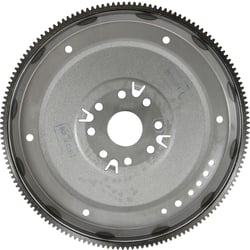
What Is a Flexplate and Why Does It Matter?
Flexplates are one of the most critical — and most overlooked — components in any automatic transmission drivetrain. A flexplate is a metal disk that connects the output from an engine to the input of a torque converter in a car equipped with an automatic transmission. It takes the place of the flywheel found in a conventional manual transmission setup.
The flexplate is a thin piece of stamped steel located on the end of the crankshaft, bolted at its outer edge to the transmission's torque converter to transfer engine power. Its design also features geared teeth around its outer edge that engage with the starter to turn the engine over on startup.
The name refers to the ability of the disk to flex along its main axis to account for gear changes and/or small misalignments as rotational speeds change. This allows it to bend forward and backward along its main axis as the crankshaft rotates faster, absorbing any minor misalignment between the engine and transmission as well as the vibrations that occur while the engine is running. On modern vehicles, if the flex plate has a tone ring, it helps the crankshaft position sensor determine the position and RPM of the crank — data the PCM uses to set the right timing for ignition and fuel injection.
When Should You Replace a Flexplate?
The job of a flexplate is to allow for expansion of the torque converter as engine RPM increases. The constant expansion and contraction over time can result in cracks and/or shearing of the flex plate — and a damaged flex plate can create serious and expensive damage. A damaged flex plate can produce unusual noises such as rattling, knocking, or grinding sounds when the engine is running — telltale signs that inspection and replacement are due. Broken flex plates cannot be repaired; they must be replaced.
Exploring the Flexplate Category
This category covers every part of the flexplate assembly system. The Automatic Transmission Flexplate is the core component, connecting the crankshaft to the torque converter. Proper installation means also sourcing quality Automatic Transmission Flexplate Bolts, which secure the plate to the crankshaft and must resist extreme rotational stress. Rounding out the system are Automatic Transmission Flexplate Balance Plates, Automatic Transmission Flexplate Shields, and Automatic Transmission Torque Converter Dust Covers — each playing a role in protecting and optimizing the assembly's performance and longevity.
Top Flexplate Brands
Choosing a quality brand matters when it comes to a part under this much stress. Pioneer Automotive is a leading name in OE-replacement drivetrain components, offering one of the widest flexplate application ranges to cover domestic and import vehicles. ACDelco, as GM's original equipment division, brings factory-spec precision and is a go-to for GM platform vehicles requiring a direct OEM-quality replacement. ATP engineers its flexplates to OE specifications — ATP flex plates are made of high-quality steel and contain the correct bolt-hole spacing and ring-gear teeth, just like the original part, to ensure long life and durability. For performance builders, ARP (Automotive Racing Products) is the gold standard for flexplate hardware, producing high-strength fastener kits engineered to handle elevated torque loads in both street and racing applications. Finally, Speedmaster rounds out the lineup with performance-oriented flexplates designed for engine swap and high-output builds, where balancing and strength tolerances go beyond stock requirements.