


Ski-Doo Formula III LT HVAC
1 HVAC for Ski-Doo Formula III LT from Walker Products. Pick your year to see exact fit.
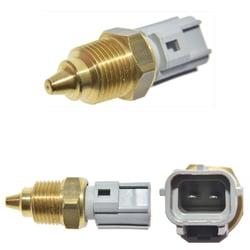

Understanding Your Vehicle's HVAC System
Heating, Ventilation, and Air Conditioning (HVAC) is one of the most complex and interconnected systems in a modern vehicle. Far more than a simple comfort feature, automotive HVAC governs cabin temperature, humidity, airflow, and air quality across every season and climate. Whether you're battling a frozen windshield in January or a sweltering commute in August, every component in the system plays a precise role in keeping the driver and passengers comfortable and safe.
At its core, the automotive HVAC system works by manipulating refrigerant between liquid and gaseous states to absorb heat from the cabin and expel it outside. The system combines mechanical, electrical, and chemical components that all depend on each other. A failure in any single part — from a worn clutch to a cracked hose — can compromise the entire system's ability to perform.
Key Subcategories of Automotive HVAC Parts
The HVAC category spans a wide range of components. The heart of any A/C system is the compressor, and the A/C Clutch and Compressor subcategory is the largest in this space for good reason — the compressor pressurizes refrigerant and drives the entire cooling loop. Without a functional compressor and clutch assembly, no cooling is possible.
Refrigerant travels through the system via a network of Hoses and Pipes, which must maintain a leak-free seal under high pressure and wide temperature swings. These lines connect every major component and are a common failure point as vehicles age, making quality replacement parts essential.
Modern vehicles rely heavily on electronics to manage climate output, and Control Modules are the brains behind automatic temperature regulation, fan speed, airflow direction, and zone-specific settings. As digital climate systems become more sophisticated, these modules handle an increasingly critical role.
The A/C Condenser and Evaporator are the system's primary heat exchangers. The condenser, mounted near the front of the vehicle, releases heat absorbed from the cabin. The evaporator, tucked inside the dash, absorbs that heat from cabin air — producing the cool, dry air that flows through the vents.
Finally, Switches and sensors throughout the HVAC circuit detect temperature, pressure, and airflow conditions — triggering compressor engagement, fan operation, and mode changes. A failed pressure switch or temperature sensor can cause erratic A/C behavior or shut the system down entirely as a protective measure.
Top Brands in Automotive HVAC
Four Seasons is the largest aftermarket automotive climate control parts supplier in the industry and the world's largest compressor remanufacturer, offering an enormous range of replacement HVAC components for virtually every domestic and import application.
Universal Air Conditioner (UAC) is a dedicated A/C specialist with a broad catalog focused entirely on mobile climate control, making it a go-to source for hard-to-find replacement condensers, compressors, accumulator/drier units, and more.
ACDelco brings GM-grade engineering and OE pedigree to the aftermarket, supplying HVAC components that meet strict original equipment standards — a trusted choice for GM vehicle owners and professionals alike.
DENSO is recognized globally as the largest manufacturer of automotive A/C equipment in the world, with thermal engineering experience stretching back to the 1950s. Their "First Time Fit" aftermarket line is built to the same OE specifications used by major vehicle manufacturers worldwide.
Motorcraft is Ford's factory-authorized parts brand, delivering HVAC components engineered specifically for Ford, Lincoln, and Mercury vehicles — providing confidence in fit, function, and longevity for Ford owners seeking OE-quality replacements.
What to Consider When Buying HVAC Parts
- OE vs. aftermarket: OE-equivalent parts from brands like DENSO and ACDelco offer factory-matched performance, while high-quality aftermarket brands like Four Seasons and UAC deliver broad coverage at competitive value.
- System-wide replacement: When replacing a major component like a compressor, it is generally recommended to replace related components (accumulator, expansion valve, orifice tube) at the same time to avoid introducing contaminants to a new part.
- Refrigerant compatibility: Ensure components are compatible with your vehicle's refrigerant type — modern vehicles have transitioned through R-12, R-134a, and increasingly R-1234yf formulations.
- Electrical integration: Control modules and switches must match your vehicle's specific platform, especially on newer models with dual-zone or multi-zone climate systems.