


Frame Gauge


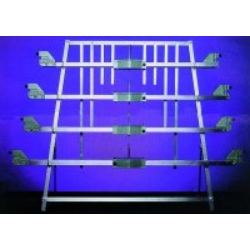 Representative Photo, actual item may vary


 Representative Photo, actual item may vary
 Representative Photo, actual item may vary
 Representative Photo, actual item may vary

What Is a Frame Gauge?
A frame gauge — also commonly called a tram gauge or tram instrument — is one of the most essential measuring tools found in any professional body shop. After a vehicle sustains collision damage, its structural geometry can be subtly or dramatically shifted. Before any meaningful repair work begins, a technician must establish exactly how far the frame, unibody structure, or suspension mounting points have moved from their factory-specified positions. That's precisely what a frame gauge is designed to do.
Tram instruments are a versatile and indispensable tool for determining collision damage to unibody cars and for checking critical measurements during repair. Technicians use them to check dimensions between control points on suspension and mechanical components, and to establish dimensions around components by comparing measurements from one side of the vehicle to the other. This side-to-side comparison technique is the foundation of structural collision repair — if both sides of a vehicle measure identically, the frame is square.
Why Frame Gauges Matter in Collision Repair
Modern vehicles — whether traditional body-on-frame trucks or unibody passenger cars — are engineered to extremely tight dimensional tolerances. Even small deviations in frame geometry can cause uneven tire wear, compromised handling, poor wheel alignment, and potential safety issues in a subsequent collision. A high-quality frame gauge allows the technician to measure before pulling, set targets during the pull, and verify the repair before the vehicle ever leaves the frame machine.
To check the crucial dimensions between the control points on the body, suspension, and mechanical components, technicians rely on tram gauges, strut tower alignment gauges, and other specialized measuring devices. Packages like the Mo-Pro Gauge Package include a universal tram gauge, a deluxe centerline gauge that measures automatic centerlines for all vehicles, and a strut tower alignment gauge that measures strut tower height at both forward and aft locations.
Key Features to Look For
- Measurement Range: Quality tram gauges measure from as little as 2-1/2" (65mm) up to 11 feet (3.3m), covering everything from door gaps to full-length diagonal measurements.
- Level Bubble: A level bubble installed in the sliding head ensures accuracy in measurement, keeping the gauge true even when reaching across large distances.
- Complete Packages vs. Individual Gauges: Some technicians prefer all-in-one kits that include tram gauges, centerline gauges, and strut tower gauges, while others build their kit piece by piece.
- Durability: Body shops are demanding environments; look for gauges with rugged construction and protective storage cases.
Top Frame Gauge Brands
Dent Fix is a leading frame gauge brand in this category, trusted by professional collision technicians for precise, well-engineered measuring solutions that hold up to daily shop use.
Mo-Clamp is a legendary name in collision repair. Mo-Clamp is the originator of the self-tightening clamp using the patented wedge pulling ring, and for decades body shops have relied on Mo-Clamp tools for strength, grip, and dependable performance in demanding repair environments. Their tram and alignment gauge lineup reflects that same commitment to accuracy and reliability.
Buske Division of VEI brings specialized expertise to the frame measurement category, offering gauging solutions built for the needs of professional collision repair facilities.
Killer Tools rounds out the category with innovative, shop-tested measuring tools designed to give technicians fast, repeatable results on the frame machine.