


Engine Paint

Dupli-Color DE1634 Engine Enamel Spray Paint with Ceramic GM/Chrysler Low Gloss Black 12 oz



Dupli-Color DE1652 Engine Enamel with Ceramic Spray Paint Chrysler Hemi Orange 12 oz


 Representative Photo, actual item may vary


 Representative Photo, actual item may vary






 Representative Photo, actual item may vary


Sherwin Williams Automotive Finishes DE1650 Dupli-Color Cast Coat Aluminum Engine Paint


 Representative Photo, actual item may vary

Eastwood Company 51615ZP Hi-Temp Engine Paint with Ceramic Nanotechnology, 650°F

 Representative Photo, actual item may vary

 Representative Photo, actual item may vary


Pioneer Automotive T-18-A High Temperature Engine Enamel Paint Ford Antique Green
 Representative Photo, actual item may vary

 Representative Photo, actual item may vary
Eastwood Company 51618ZP Ceramic Nano-Technology Engine Enamel Paint - 650°F Heat Resistant

What Is Engine Paint and Why Does It Matter?
Engine paint is a specially formulated coating designed to withstand the extreme heat, chemical exposure, and mechanical stress found in an engine bay. Unlike ordinary spray paint or primer, a true engine enamel must resist temperatures that can exceed 500°F on block surfaces and far higher on exhaust-adjacent components — all while holding up against oil, coolant, and brake fluid splatter. Beyond pure protection, engine paint is a cornerstone of any engine restoration or restomod build, returning aged castings to a factory-fresh look or allowing builders to customize an engine bay with bold, durable color.
Where Engine Paint Is Used
Engine paint is applied to a wide variety of underhood surfaces, including engine blocks, cylinder heads, intake manifolds, valve covers, alternators, water pumps, and timing covers. Builders undertaking a full engine-out restoration will often strip, degrease, and sand these components before applying several coats of high-heat enamel. Even on a running engine, careful masking and a rattle-can application can refresh faded or flaking factory coatings. The right paint not only protects bare metal from oxidation but also makes future cleaning far easier — oil and grime wipe off a smooth, cured enamel surface with minimal effort.
Key Considerations When Shopping Engine Paint
- Heat Rating: Match the paint's temperature rating to the part being coated. Block enamels typically need to handle 250–500°F, while header and exhaust coatings must endure 1,000°F or more.
- Finish Type: Options range from gloss and semi-gloss to satin and flat. Gloss finishes showcase show-car engine bays; flat or satin coatings lend a factory or stealth look.
- Color Accuracy: Many brands offer OEM-matched colors for popular manufacturers like Ford, GM, Mopar, and Pontiac — critical for concours restorations.
- Application Method: Aerosol cans offer convenience for smaller jobs and touch-ups, while quart and gallon formats are better suited for brush or spray-gun application on large-scale builds.
- Cure Process: Some formulas air-dry to a tough finish; others require a heat-cure cycle by running the engine to achieve maximum hardness and chemical resistance.
Top Engine Paint Brands
Dupli-Color is one of the most widely recognized names in automotive touch-up and specialty coatings, offering an extensive range of engine enamels in OEM-matched and custom colors. Their aerosol engine paints are popular for their ease of use and ability to air-dry to a durable, oil-resistant finish without requiring a topcoat.
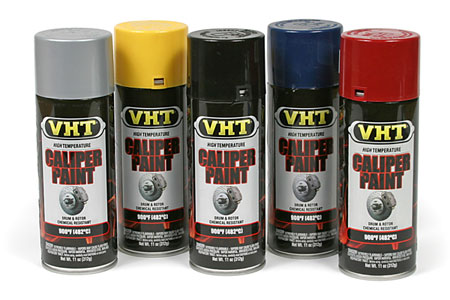
VHT (Very High Temperature) has built its reputation specifically around coatings engineered for extreme heat. VHT's engine enamel and FlameProof lines are formulated for components exposed to intense thermal cycling, making them a go-to for enthusiasts tackling headers, exhaust manifolds, and engine blocks alike.
Seymour Paints brings professional-grade, high-heat aerosol coatings to the engine paint market. Their products are well-regarded in the restoration and industrial communities for strong adhesion and consistent coverage on cast iron and aluminum surfaces.
U-Pol is a globally recognized coatings brand known for innovative, high-performance paint products. Their engine and underhood coatings deliver a robust protective film that stands up to oils and fluids, making them a solid choice for professional-grade finishing work.
Eastwood Company has long been trusted by the restoration community for hard-to-find tools and specialty coatings. Their engine paint lineup includes high-temp enamels and detail-friendly aerosols purpose-built for the home restorer and professional builder alike, with a focus on OEM color accuracy and long-term durability.