


Engine Connecting Rod Bearing

Federal Mogul FP-3939859 Standard Connecting Rod Bearing Half - Cummins B-Series Diesel



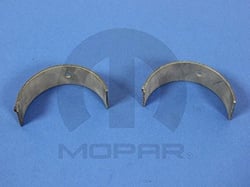
Mopar Performance 4626657AD Connecting Rod Bearing Package Standard Size
 Representative Photo, actual item may vary
Federal Mogul FP-AR46396 Connecting Rod Bearing Set John Deere Diesel .010 OS
 Representative Photo, actual item may vary
 Representative Photo, actual item may vary
 Representative Photo, actual item may vary
 Representative Photo, actual item may vary
 Representative Photo, actual item may vary
 Representative Photo, actual item may vary

 Representative Photo, actual item may vary
 Representative Photo, actual item may vary

MAHLE CB-663HXN H-Series Performance Connecting Rod Bearing Set Small Block Chevy

 Representative Photo, actual item may vary
IAP 113105725T Connecting Rod Bearings 0.040" Journal Engine Rod Bearing

 Representative Photo, actual item may vary
 Representative Photo, actual item may vary
IAP AC105141CLB CLEVITE Rod Bearing Set Chevy .010 Undersize
 Representative Photo, actual item may vary
Automobile Associates 930-103-148-83 Connecting Rod Bearing Set for Porsche



 Representative Photo, actual item may vary
 Representative Photo, actual item may vary
 Representative Photo, actual item may vary


 Representative Photo, actual item may vary
 Representative Photo, actual item may vary


 Representative Photo, actual item may vary



 Representative Photo, actual item may vary


Enginetech BB353J010 Connecting Rod Bearing Set GM Chevy Small Block 262 267 305 307 327 346 350 400 +.002" Oversize
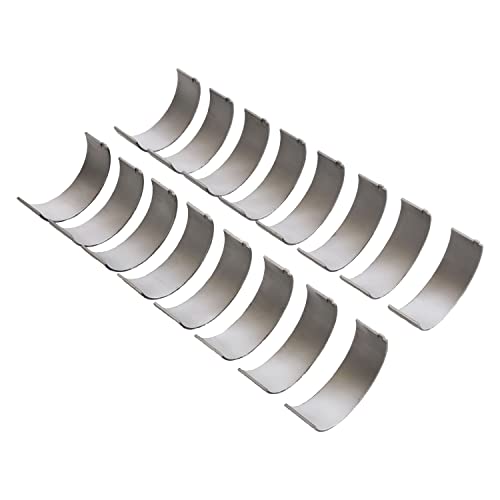 Representative Photo, actual item may vary
 Representative Photo, actual item may vary
ACL Bearings 8B927HC-001 Coated Rod Bearing Set Ford 377ci Cleveland Stroker


King Engine Bearings CS517BB Connecting Rod Bearing Set for Ford 370 429 460 V8


Federal Mogul 1575CPA20 Clevite 77 Engine Connecting Rod Bearing Set 0.020" Undersize


What Are Engine Connecting Rod Bearings?
Engine connecting rod bearings are among the most critical — and most underappreciated — components in any internal combustion engine. Located between the connecting rods and the crankshaft, these precision-engineered shell bearings allow the reciprocating motion of each piston to be smoothly converted into the rotational force that drives your vehicle. Without them, the metal of the connecting rod would grind directly against the crankshaft journal, leading to catastrophic and often irreparable engine damage.
Each connecting rod bearing consists of two semi-circular shells that clamp around the crankshaft's rod journal. A thin, pressurized film of engine oil separates the bearing surface from the spinning crankshaft — the metal surfaces ideally never make direct contact. This hydrodynamic oil film is what absorbs load, manages heat, and keeps friction to an absolute minimum. Because of this, bearing clearance, oil viscosity, and lubrication integrity are all critical variables for long engine life.
Why Connecting Rod Bearings Matter
Bearings must withstand enormous cyclic loads from combustion events happening thousands of times per minute, all while operating at high temperatures. Their material construction — whether bi-metal, tri-metal, or advanced polymer-coated — directly determines how well they handle fatigue, embed contaminants, resist seizure, and conform to the crankshaft journal. Choosing the right bearing for your specific application — stock OE replacement, high-performance street build, racing engine, or heavy-duty diesel — can mean the difference between a long-lasting engine and a costly bottom-end failure.
Warning signs of worn rod bearings include a sharp knocking noise that rises and falls with engine RPM, a drop in oil pressure, and metallic particles visible in drained engine oil. Catching these symptoms early and replacing bearings promptly is far less expensive than a crankshaft grind or full engine overhaul.
Choosing the Right Rod Bearing
- Application type: Stock replacement bearings prioritize quiet operation and longevity; performance and race bearings prioritize load capacity and seizure resistance.
- Material construction: Bi-metal bearings suit many modern OE-style applications; tri-metal bearings offer superior fatigue strength for high-performance use; polymer-coated bearings add an extra layer of protection during cold starts and extreme loads.
- Bearing clearance: Match the bearing size (standard, undersize) to your crankshaft journal dimensions. Incorrect clearance leads to reduced oil film strength or excessive oil bleed-off.
- Engine modifications: Forced induction, increased compression, or high-RPM operation all increase bearing load — step up to a higher-rated bearing accordingly.
Top Brands in Engine Connecting Rod Bearings
King Engine Bearings has been exclusively focused on engine bearings since 1960, covering applications from everyday automobiles to heavy-duty trucks, marine, and aviation engines. King's singular focus on bearings means their engineering resources go entirely into bearing innovation — including proprietary features like tight wall-thickness tolerances and advanced overlay materials for both street and race applications.
Clevite has been setting the standard in precision engine bearings since the development of the first precision insert-type bearing in 1929. Their legendary TriMetal™ construction — a hardened steel back, copper-lead alloy layer, and electroplated white metal overlay — delivers an ideal combination of conformability, embedability, and fatigue resistance trusted by NASCAR and IndyCar teams for decades.
ACL Bearings is a respected Australian manufacturer well regarded among performance engine builders worldwide for their race series and OE-quality replacement bearings. ACL offers a broad catalog of connecting rod bearings with a strong reputation for dimensional consistency and material quality.
MICHIGAN 77 is a heritage American bearing brand known for supplying dependable OE-specification connecting rod bearings across a wide range of domestic engine applications, making it a go-to choice for restoration and OE-style rebuilds.
Kolbenschmidt (KS) is a German engineering brand and global OEM supplier with decades of experience producing precision engine bearings to exacting European standards, offering excellent coverage for import and European vehicle applications.