


Infrared Thermometer
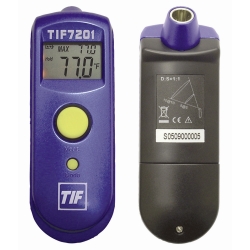 Representative Photo, actual item may vary


Raytek MTAPK Carrying Pouch and Wrist Strap Kit for MiniTemp Infrared Thermometers
What Is an Infrared Thermometer — and Why Every Technician Needs One
An infrared thermometer, sometimes called a temp gun or non-contact thermometer, is one of the most versatile diagnostic hand tools in any garage or professional shop. Rather than requiring physical contact with a surface, it measures thermal radiation emitted by an object and converts that energy into an instant temperature reading on a digital display — all from a safe distance. The result is a near-instantaneous surface temperature reading without the need to mount sensors or wait for probes to equalize.
The core technology is straightforward: a built-in lens directs infrared energy onto a series of thermocouples, which translate that energy into a voltage value calculated as a temperature. A laser pointer helps you aim precisely at the spot you want to measure, making it easy to target small or hard-to-reach components even in a crowded engine bay.
Key Automotive Applications
The real power of an infrared thermometer lies in how broadly it can be applied across virtually every vehicle system. A non-contact temperature gun can be used to quickly and accurately diagnose problems with heating and cooling systems, radiators, fan belts, pulleys, brakes, tires, and even cylinder misfires. Some of the most common use cases include:
- Cooling system diagnostics: Scan the radiator, coolant lines, and hoses for hot or cold spots that indicate blockages or circulation failures.
- Brake inspection: Measure rotor and caliper temperatures across all four corners after a test drive to identify dragging brakes or uneven wear.
- HVAC troubleshooting: Test inlet and outlet vent temperatures, supply lines, and condensers to pinpoint failures in the heating or air conditioning system.
- Engine performance checks: Identify hot spots on belts, pulleys, and exhaust components that signal bearing failures, timing issues, or exhaust leaks.
- Electrical system inspection: Scan wiring harnesses, fuse boxes, and connectors for overheating circuits that can indicate shorts or excessive resistance.
- Catalytic converter testing: Confirm proper converter function by checking for a temperature rise from inlet to outlet — no drilling or probes required.
What to Look for When Shopping
Not all infrared thermometers are the same, and choosing the right one for automotive work requires understanding a few key specifications. Distance-to-spot (D:S) ratio determines how large a measurement area the thermometer reads at a given distance — a higher ratio means you can measure a smaller spot from farther away, which matters when targeting tight engine components. Adjustable emissivity is another important feature: different surfaces (polished metal, rubber, painted parts) emit infrared energy differently, and a thermometer that allows emissivity adjustment delivers more accurate readings across varied materials. For shop use, look for a backlit or color LCD screen for readability in dim conditions, plus features like max/min hold and data lock for more thorough diagnostics. Durability also matters — automotive environments are rugged, so a well-built housing that withstands drops and grease exposure is a practical must.
Top Brands in Infrared Thermometers
Raytek is a recognized leader in non-contact temperature measurement, building a comprehensive line of infrared thermometers engineered for industrial, process control, and maintenance applications. Now part of the Fluke family of companies, Raytek brings decades of precision instrument expertise to portable IR thermometers, offering a broad range of temperature spans, sighting options, and optical configurations to suit demanding professional use.