


Bumper Reinforcement Bar
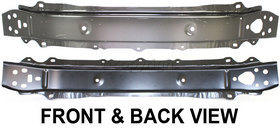 Representative Photo, actual item may vary

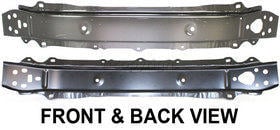 Representative Photo, actual item may vary
Replacement SET-REPM012541 Front Bumper Reinforcement Cover Set for Mitsubishi Outlander Sport/RVR
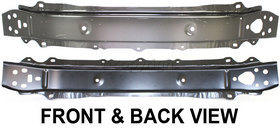 Representative Photo, actual item may vary
Replacement SET-RM01250029 Bumper Reinforcement Set for Mercedes C63 AMG
 Representative Photo, actual item may vary
J.C. Whitney SET-JG01250001Q Front Lower Outer Bumper Reinforcement Set CAPA Certified
 Representative Photo, actual item may vary
J.C. Whitney SET-JT01250005 Front Bumper Reinforcement Inner Extension Set
What Is a Bumper Reinforcement Bar?
Hidden behind your vehicle's painted bumper cover lies one of the most important structural safety components on the car: the bumper reinforcement bar. Also called an impact bar or rebar, this rigid beam is mounted to the vehicle's frame rails and sits directly behind the energy-absorbing foam or honeycomb material tucked inside the bumper assembly. While the plastic cover handles aesthetics, the reinforcement bar is responsible for the heavy lifting when a collision occurs.
Modern bumper systems are engineered as a multi-layer crash-energy management system. The outer cover flexes, the absorber compresses, and the reinforcement bar distributes impact forces across the frame — all working together to protect the passenger compartment and minimize damage to critical mechanical components. Because of this layered design, even a low-speed parking lot fender-bender can damage the reinforcement bar without visibly deforming the bumper cover.
Why Replacement Matters
A bumper reinforcement bar that has sustained any bending, cracking, or deformation must be replaced rather than repaired. After an impact, metal can suffer internal stress and micro-fracturing that is invisible to the naked eye but dramatically reduces the bar's ability to absorb energy in a subsequent collision. Industry professionals universally recommend replacing a damaged reinforcement bar with a new, properly rated component to restore your vehicle's original crash performance.
Common signs that your bumper reinforcement bar may need attention include a misaligned or sagging bumper cover, visible creases or buckles after a collision, rust or corrosion on the bar itself, and improperly seated parking sensors or backup cameras — since the reinforcement bar often serves as a mounting reference for these components.
Materials and Construction
Bumper reinforcement bars are manufactured from several materials depending on the vehicle make and model. High-strength steel and ultra-high-strength steel (UHSS) are the most common, valued for their rigidity and impact resistance. Aluminum is frequently used on newer, lighter vehicles where weight savings are a priority. Selecting a replacement bar made from the correct material and to the correct specifications is critical — the wrong material can affect the vehicle's crash zone performance and overall safety rating.
Top Bumper Reinforcement Bar Brands
Sherman is a trusted name in OEM-quality collision repair and restoration parts. Founded in 1981 and operating from a large Michigan facility, Sherman engineers bumper reinforcement bars to duplicate factory components as closely as possible, with materials matched to original specifications for strength and fit.
Diamond Standard brings a safety-first philosophy to structural bumper components. Their certification program, developed with crashworthiness experts, subjects structural bumper parts to quasi-static, dynamic, and destructive testing protocols — and uniquely, publishes those results. Each part carries a traceable serial number and is certified to be equivalent in performance to the OE service part it replaces.
Platinum Plus offers bumper reinforcement bars held to a high standard for fit and finish, comparable to what OEM manufacturers require. This quality tier is a popular choice for repair shops and DIYers who want reliable performance without compromise.
Reflexxion Automotive is a well-regarded manufacturer of aftermarket body parts, known for producing steel components designed for precise vehicle-specific fitment. Their bumper reinforcement offerings cover a broad range of domestic and import applications.
What to Look for When Shopping
- Vehicle-specific fitment: Always verify the part is designed for your exact year, make, and model — even minor variations in body style can affect mounting points.
- Material match: Choose a replacement bar that matches the original material (steel vs. aluminum) to preserve crash zone behavior.
- Certification: Look for CAPA-certified or NSF-certified parts if OE-equivalent crash performance is a priority.
- Front vs. rear: Front and rear reinforcement bars are distinct parts with different load ratings; confirm you are ordering the correct position.
- Inspect related components: When replacing the reinforcement bar, also inspect the crush boxes, energy absorber, and mounting brackets — these sacrificial components often require replacement at the same time.