


OEM Turbocharger Cut-Off Valve
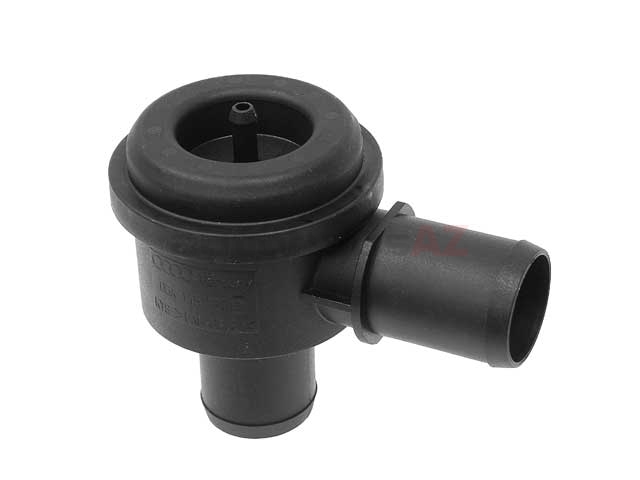 Representative Photo, actual item may vary
Why OEM Turbocharger Cut-Off Valves Are the Right Choice
When a turbocharger cut-off valve starts to fail, the consequences reach well beyond a simple boost leak. Turbocharger cut-off valves — also known as diverter valves or bypass valves — serve a critical function in any forced-induction engine: they release residual boost pressure back into the intake tract the moment the throttle snaps shut. Without a properly functioning valve, that trapped pressure has nowhere to go except backwards through the turbocharger compressor, a condition known as compressor stall.
Compressor stall is more than just an annoying chatter. It places abnormal stress on turbocharger bearings and, if left uncorrected, can accelerate wear to the point that the entire turbocharger requires replacement. That is precisely why sourcing the right replacement valve matters — and why OEM parts represent the most dependable path back to factory-correct performance.
What Makes OEM Cut-Off Valves Different
The term OEM — Original Equipment Manufacturer — refers to the parts made to the exact specifications installed by the vehicle manufacturer at the factory. These are not "equivalent" or "compatible" approximations; they are built to the same tolerances, material grades, and dimensional standards as the part that came on the vehicle originally. This matters enormously for turbocharger cut-off valves, where the solenoid response time, valve seat geometry, and diaphragm or piston construction must match the ECU's control logic precisely.
The ECU in a turbocharged vehicle monitors throttle position continuously. When a rapid reduction in accelerator pedal position is detected, the ECU energizes the solenoid coil to open the valve and vent boost pressure — a sequence that must happen within a very specific window. An OEM valve is calibrated to respond to these signals exactly as the factory intended, preserving both throttle response and turbocharger longevity.
OEM turbocharger cut-off valves are commonly found on European turbocharged platforms — particularly Audi and Volkswagen applications — where factory part numbers like 06A145710N and 06A145710P are direct-fit solutions for models including the A4, TT, Jetta, Golf, Passat, and Beetle. These factory-specification valves ensure the solenoid actuation, pressure ratings, and mounting interfaces are identical to what the OEM engineers originally validated.
Symptoms of a Failing Turbocharger Cut-Off Valve
- Boost leaks and loss of power – A ruptured diaphragm allows pressurized air to escape, reducing turbocharger efficiency
- Compressor stall noise – A stuck-closed valve sends backpressure through the turbo, causing a distinctive chattering or fluttering sound
- Turbo lag on re-acceleration – A stuck-open valve allows boost to bleed off constantly, delaying spool-up when the throttle reopens
- Diagnostic trouble codes – Failures often trigger codes such as P0299 (underboost) or P0234 (overboost condition)
Restore Factory Performance with Confidence
Because OEM turbocharger cut-off valves are designed and manufactured to the same standards as the original component, installation is straightforward — no modifications, no adapters, no calibration. The valve drops into the existing mounting position and integrates seamlessly with the vehicle's boost management system. For any turbocharged vehicle where reliability and factory-correct operation are the priority, an OEM cut-off valve is the definitive solution.
Browse the full selection of OEM parts or explore the complete range of turbocharger cut-off valves available across all brands.