


Rugged Ridge HFB-01-010 5" Round LED Lasso Light with 2-Plug Wiring Harness

 Representative Photo, actual item may vary


Morimoto HEADTAILKIT110 XB EVO LED Headlights & XB LED Tail Lights Bundle LF2-531 LF739

 Representative Photo, actual item may vary

Custom Dynamics CD-IND-TMWK1BM Magical Wizard LED Engine Kit for Indian with Bluetooth

Custom Dynamics CD-ROCK-KIT Magical Wizards RGB LED Rock Light Kit with Bluetooth Controller

Custom Dynamics GENPLASMA12DC2 Dual Color Plasma Rod 12" LED Light Kit Red Amber


Custom Dynamics MWZ-OR-SNOW-01 Magical Wizards Snowmobile LED Running Board Kit

Custom Dynamics MWZ-OR-24 Heavy-Duty Magical Wizards LED Strip 24 Inch 24 LEDs Off-Road


Custom Dynamics PG-GC1-KIT ProGLOW Color Changing LED Golf Cart Underglow Kit
 Representative Photo, actual item may vary
Custom Dynamics PG-FULL-KIT ProGlow Color Changing LED Full Bike Light Kit

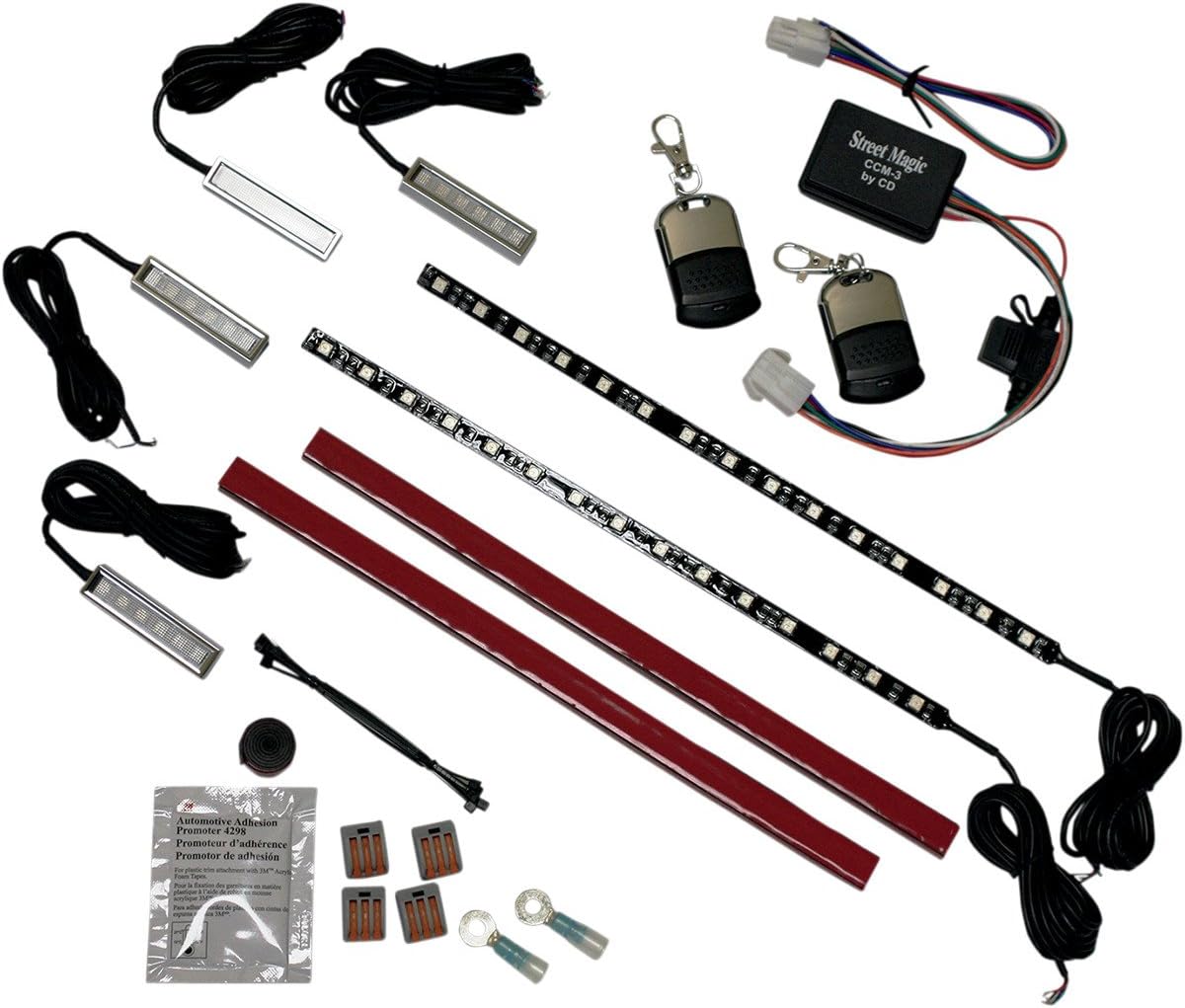
Custom Dynamics TMWZ02BM6 Magical Wizard Super Kit LED Accent Lighting with Bluetooth

 Representative Photo, actual item may vary

What Is Automotive Exterior Lighting?
Automotive exterior lighting serves to ensure safety in road traffic. Headlights — with high beam, low beam, and fog light functions — help the driver illuminate the lane and clearly see the road, obstacles, and traffic signs. For other drivers on the road, exterior lighting ensures that road users perceive the presence of the vehicle, recognize a driver's intentions, and can react accordingly. In short, exterior lighting is one of the most critical safety systems on any vehicle.
The Major Types of Exterior Lighting
Car lights include headlights, taillights, brake lights, turn signals, and fog lights, each serving a distinct safety function. Every vehicle carries a full set of lights with specific jobs — some help you see the road, others make you visible to everyone around you. Here is a closer look at what each category does:
- Headlights: The headlights are the primary light source on any vehicle, providing drivers with visibility during low-light conditions and at night. They come with different types of light sources — including halogen, LED, and xenon (HID) — with each type offering a different level of efficiency, brightness, and longevity.
- Taillights & Brake Lights: Taillights are located at the rear of the vehicle and serve as an essential safety feature. They signal the vehicle's presence to drivers behind and indicate the car's braking and turning intentions. Car taillights are typically red and consist of multiple bulbs, becoming brighter when the brake pedal is pressed, alerting other drivers to slow down.
- Fog Lights: Fog lights are low-mounted, wide-beam lights designed for fog or heavy mist. They sit low to cut through conditions without reflecting back into the driver's eyes.
- Daytime Running Lights (DRLs): DRLs increase the visibility of the vehicle during the day, helping to reduce the risk of traffic accidents.
- Turn Signals: Found on the front and back of the vehicle, turn signals indicate the driver's intention to turn or change lanes. They can also function as hazard lights, to flash a warning or communicate distress.
- Backup Lamps: Backup lamps are used to illuminate the area behind the vehicle when it travels in reverse.
Halogen, HID, and LED: Choosing Your Light Source
Halogen lights have been the standard lighting option for automobiles for many years, using a tungsten filament encased in a halogen gas-filled bulb. LED headlights are now the standard for most new vehicles — they are energy efficient, long-lasting, and allow designers to create sharp, signature light shapes. For those seeking maximum output, matrix LED systems use dozens to thousands of individually controlled LED segments that shape the beam in real time, brightening some zones and dimming others based on traffic and road conditions.
Compliance and Regulations
All exterior lighting on a vehicle is subject to country-specific legal regulations to ensure safe driving. Lighting must not create glare for oncoming drivers, and signal lights such as turn signals and stop lights must be clearly visible. In the United States, FMVSS 108 regulates all exterior vehicle lighting — white and amber lights are permitted for the front and red for the rear, while blue, green, or flashing lights are illegal for civilian use in all states. When shopping for replacement or upgrade lighting, look for terms like "DOT-compliant" for functional lights to ensure your purchase meets federal safety standards.
When to Replace or Upgrade Your Exterior Lights
Exterior lighting degrades over time. Lens housings can yellow and oxidize, bulbs lose output before they fully burn out, and wiring connections can corrode — all of which reduce nighttime visibility well before a warning light ever appears on your dashboard. Whether you are restoring a factory look with OEM-style replacements or upgrading to brighter, more modern LED assemblies, keeping your exterior lighting in top condition is one of the most straightforward and impactful maintenance tasks you can perform on any vehicle.