


Hermetic & Reciprocating Compressors
 Representative Photo, actual item may vary

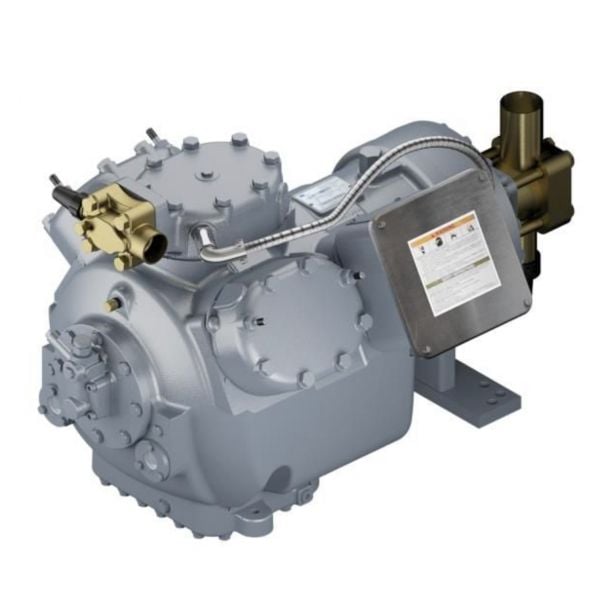 Representative Photo, actual item may vary

 Representative Photo, actual item may vary

What Are Hermetic & Reciprocating Compressors?
At the heart of nearly every refrigeration and cooling system is a compressor — the component responsible for pressurizing refrigerant and driving the entire refrigeration cycle. Hermetic and reciprocating compressors represent two of the most widely used compressor designs in commercial and light-commercial refrigeration, HVAC systems, reach-in coolers, display cases, cold rooms, and refrigerated transport equipment.
A hermetic compressor seals the motor and compressor pump together inside a welded steel shell, protecting internal components from contamination and eliminating shaft seals that can wear and leak over time. This design is particularly common in smaller and medium-capacity refrigeration units where serviceability is less critical than long-term reliability. Reciprocating compressors, sometimes called piston compressors, use a piston-and-cylinder mechanism to compress refrigerant vapor — a proven, robust technology that handles a wide range of refrigerants and capacities, from fractional horsepower units to large commercial systems exceeding 20 HP.
Together, these compressor types are foundational to commercial refrigeration infrastructure. Whether you are replacing a failed unit in a convenience store cooler, a restaurant walk-in, a medical refrigerator, or an HVAC condensing unit, selecting the correct compressor — matched to refrigerant type, operating temperature range, and horsepower rating — is critical for system efficiency, energy consumption, and equipment longevity.
What to Consider When Choosing a Compressor
- Refrigerant compatibility: Modern systems may use R134a, R404A, R407C, R290, R600a, or newer low-GWP alternatives. Always verify the compressor is rated for your system's refrigerant.
- Capacity and horsepower: Match the BTU or kW capacity to your system's design load. An undersized or oversized compressor leads to inefficiency and premature failure.
- Operating temperature range: Medium-temperature and low-temperature applications require different compressor designs and specifications.
- Voltage and phase: Confirm electrical compatibility (115V, 208-230V, single or three-phase) with your existing system.
- Fixed-speed vs. variable-speed (inverter): Inverter-driven compressors modulate capacity to match demand, improving energy efficiency and reducing wear from frequent start-stop cycling.
Top Brands in Hermetic & Reciprocating Compressors
Embraco is one of the world's leading manufacturers of hermetic compressors, with decades of expertise supplying the commercial and household refrigeration industries. Their compressors are widely specified for display cabinets, reach-in coolers, and vending equipment, and are known for energy efficiency and reliable performance across a broad range of refrigerants.
Copeland, a brand long associated with innovation in compression technology, offers a robust lineup of reciprocating and hermetic compressors trusted throughout the HVAC and commercial refrigeration trades. Copeland compressors are a go-to choice for technicians and OEM system builders alike, valued for their durability and broad application coverage.
Danfoss brings engineering precision to the hermetic and reciprocating compressor space, with a range spanning fractional to 26 HP capacities. Their Maneurop® reciprocating compressor line is designed for commercial refrigeration applications including cold rooms, milk tanks, and air dryers, and supports both traditional and newer low-GWP refrigerants.
Kulthorn is a well-regarded manufacturer of hermetic compressors for light commercial and refrigeration applications, offering cost-effective solutions commonly used in display coolers and refrigeration equipment across the foodservice industry.
Daikin-McQuay brings the engineering depth of the global Daikin organization to commercial compressor applications, with products suited to demanding HVAC and refrigeration environments where reliability under continuous operation is essential.