


DAP Foam Sealants/Flotation



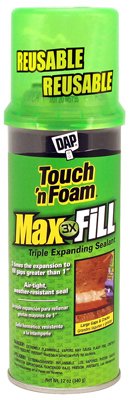 Representative Photo, actual item may vary

DAP Foam Sealants: Gap-Filling Performance Since 1865
DAP has been in the sealant business since 1865, and its foam products reflect that long track record. Within the Foam Sealants/Flotation category, DAP is best known for its Touch 'n Foam line of polyurethane expanding foams, which are designed to fill voids, seal gaps and block air and moisture in places where a bead of caulk simply cannot reach. As part of the broader DAP brand, these foams sit alongside the company's caulks, adhesives and patch-and-repair products, and they benefit from the same focus on dependable, jobsite-ready formulas.
The Touch 'n Foam Product Family
The core of DAP's offering is a set of expansion-rated formulas, each matched to a different job. Choosing the right one matters, because expansion pressure and cure behavior differ significantly between products.
- Touch 'n Foam Max Fill: The maximum expanding formula, sold in the familiar green can, delivers three times the expansion to fill gaps wider than one inch. Its weather-resistant bond seals out drafts while blocking insects and other pests, and it can be used indoors or outdoors. It is also water resistant, fire retardant, paintable and sandable.
- Touch 'n Foam HomeSeal: This all-purpose minimum expanding foam works indoors and outdoors, and because it expands less than Max Fill it is better suited to smaller cracks and voids. That makes it a sensible choice around pipes, hose bibbs and joist gaps.
- Touch 'n Foam Pro Window & Door: A one-component polyurethane foam with a minimal expanding formula guaranteed not to warp or bow window or door frames and jambs. It is dispensed with a gun applicator for greater control and adjustable output.
DAP also extends the Touch 'n Foam name into specialty formulas, including pest-resistant foam sealants and black exterior foams for landscape and outdoor projects, giving buyers options beyond standard white or off-white interior foam.
What to Consider When Choosing a Foam Sealant
The most important decision is matching expansion to the gap. A high-expansion foam in a narrow window shim space can exert enough force to distort a frame, while a low-expansion foam in a wide void may leave gaps unfilled. Straw-style can applicators suit small repairs and occasional use, while gun-applied foam gives professionals finer control over bead size and output on larger jobs.
Other practical points include:
- Cure and finishing: Cured foam can generally be trimmed, sanded and painted, but exposed polyurethane foam should be protected from prolonged sunlight.
- Temperature and surface prep: Surfaces should be clean and free of loose debris, and the can should be used within the temperature range stated on its label.
- Safety: Uncured polyurethane foam is sticky and can irritate skin and eyes, so gloves and eye protection are standard practice.
Why DAP Stands Out in This Category
DAP Global Inc. holds the number one brand recognition and market share position in the U.S. and Canada for the residential caulk and sealant market. That familiarity carries into foam, where the color-coded cans make it easy to tell a maximum-expanding formula from a low-pressure one at a glance. Its parent company, RPM International, backs the brand with manufacturing and distribution facilities across the U.S., Mexico and Canada.
Browse the full range of foam sealants and flotation products, or visit the DAP brand page to explore the rest of the lineup.