


Carburetor Power Valve Block-Off Plug




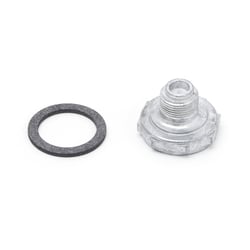

What Is a Carburetor Power Valve Block-Off Plug?
If you've ever dug into the tuning details of a Holley-style carburetor, you've likely encountered the power valve — a small but critical component tucked into the metering block. Carburetor power valve block-off plugs are precision-machined solid plugs designed to permanently seal the power valve port when the valve itself is removed. Understanding when and why to use one can make the difference between a well-tuned race engine and a fuel delivery headache.
How the Power Valve Works — And Why You'd Block It Off
The power valve is an integral part of the carburetor's fuel enrichment system. Holley carburetors are specifically designed around this component: its primary function is to enrich the air-fuel mixture during periods of high load or heavy acceleration, ensuring optimal performance and fuel efficiency. It does this by sensing manifold vacuum — when vacuum drops under hard acceleration or heavy load, the valve opens and supplies additional fuel through the power valve channel restrictors (PVCR) alongside the main jets.
However, there are specific scenarios where bypassing this system entirely is the preferred approach. The power valve is sometimes removed from race-only engines, due to the erratic vacuum signal which is usually caused by cams with a lot of duration and little overlap. Aggressive camshaft grinds common in drag racing applications can produce low, unstable idle vacuum, making it difficult for the power valve to function predictably. If you have a dedicated race engine that never sees part throttle, but goes right from idle to full throttle, you may see more consistency by blocking the valve off entirely.
By blocking the power valve, the carburetor operates on a more consistent fuel curve without fluctuations caused by the opening and closing of the valve. This is particularly useful for bracket racers and heads-up competitors who demand repeatability in every pass. Keep in mind, though: blocking off the power valve is not recommended for street or street/strip applications that see any part throttle at all.
Jetting Adjustments Are Required
Installing a block-off plug is not a standalone modification. Because the power valve normally contributes to fuel enrichment under load, removing it leans out the mixture significantly. When the power valve is blocked off, the main jets need to be increased by 6–8 sizes to compensate for the lost fuel enrichment. Skipping this step can result in a dangerously lean condition under wide-open throttle — so always re-jet the carburetor after installing a block-off plug.
Installation
The block-off plug screws right in place of the existing power valve using the same thread pattern — typically a 1/2-28 thread size for most popular Holley-style carburetors. Most plugs include a gasket to ensure a proper, leak-free seal. Make sure it's properly seated and tightened to prevent leaks, as an improperly installed plug can allow air or fuel to bypass the metering block and upset the tune.
Top Brands for Carburetor Power Valve Block-Off Plugs
Holley is the definitive name in this category — their block-off plugs are engineered specifically for their iconic carburetor lineup, including the Model 2300, 4150, 4160, and 4500 series, and come complete with a gasket for a ready-to-install solution straight from the original manufacturer.
Mr. Gasket brings decades of sealing expertise to the table, offering a block-off plug with broad compatibility across Holley, Carter AFB and AVS, Demon Race, Speed and Road, and Edelbrock Performer Square Flange carburetors — making it a go-to choice for builders working across multiple carburetor platforms.