


Test Light


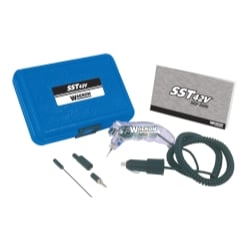 Representative Photo, actual item may vary



 Representative Photo, actual item may vary



What Is a Test Light and Why Do You Need One?
A test light is one of the simplest yet most indispensable tools in any mechanic's arsenal. At its core, it is a handheld probe with an integrated indicator light — typically an LED or incandescent bulb — that illuminates when electrical current is detected at a test point. Whether you are diagnosing a blown fuse, tracing a broken circuit, or verifying that power is reaching a component, a test light gives you an instant, visual answer without the complexity of a multimeter.
How Test Lights Work
Most test lights consist of three parts: a pointed metal probe tip, a transparent handle housing the indicator bulb, and a grounding clip attached to a wire. To use one, you clip the ground wire to a known good ground — typically a bare metal point on the vehicle's chassis — then touch the probe tip to the circuit or terminal you want to test. If voltage is present, the light illuminates. It is that straightforward. This makes test lights especially valuable for quick checks along wiring harnesses, at fuse boxes, relay panels, sensors, and switches.
More advanced circuit testers include self-powered or logic-level designs that can detect both power and ground faults without needing an external reference. Some feature audible alerts alongside visual indicators, making them useful in tight engine bays where watching a probe tip is awkward.
Common Applications
- Checking fuses and relays in the fuse box
- Verifying power delivery to switches, sensors, and actuators
- Tracing open circuits and shorts in wiring harnesses
- Diagnosing lighting system failures (headlights, taillights, turn signals)
- Confirming proper ground connections throughout the vehicle
- Testing battery terminals and charging system outputs
Choosing the Right Test Light
When selecting a test light, consider the voltage range you will be working with. A standard 12V automotive test light works for most passenger car and truck applications, but if you work on heavy-duty commercial vehicles or marine equipment, look for probes rated for higher voltages. LED-based test lights are generally preferred over incandescent models because they draw less current from the circuit under test, reducing the risk of damaging sensitive electronics. A comfortable, well-insulated handle and a long, flexible ground lead also go a long way in a real-world shop environment.
Top Brands in Test Lights
Waekon Industries is a well-regarded name in professional automotive diagnostic tools, known for building rugged, accurate test equipment trusted by technicians in independent shops and dealerships alike. Their test lights are designed with the working mechanic in mind — durable construction, clear visual indicators, and reliable performance across a wide range of automotive electrical systems.