


Bump Steer Gauge


Longacre Racing Products 52-79121 Bump Steer Gauge Adapter Stand-Offs for Wilwood Snap Cap Hubs


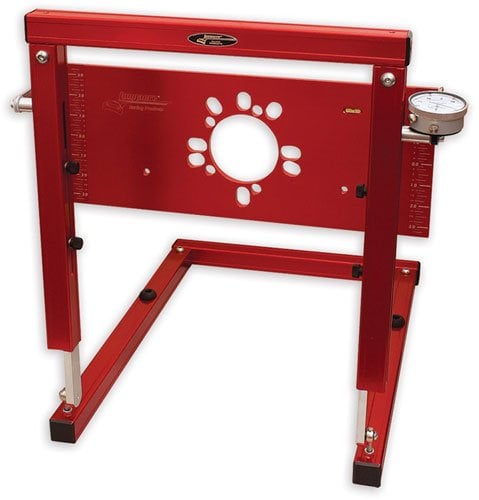 Representative Photo, actual item may vary
Longacre Racing Products 52-79020 Billet Aluminum Bump Steer Plate 5 Bolt Pattern


 Representative Photo, actual item may vary

What Is a Bump Steer Gauge and Why Does It Matter?
Bump steer is one of the most overlooked — yet consequential — suspension geometry problems a builder or tuner can face. At its core, bump steer is the tendency of a wheel to steer itself as the suspension moves through its travel range. Rather than simply compressing straight up and down, the wheel changes its toe angle, causing the vehicle to turn without any input from the driver. On the street, this shows up as a steering wheel tug over potholes or unpredictable wandering on rough pavement. On the track, it can mean missing your braking points, fighting the wheel through corners, or struggling with unexpected direction changes mid-turn.
The root cause is a geometry mismatch: when the arcs traced by the tie rod and the suspension control arms don't align through vertical travel, the wheels are forced to steer themselves. Even small changes — a lowered ride height, a relocated rack, a different steering arm — can introduce or worsen bump steer. Because the effect can be subtle, many builds go undiagnosed until a driver notices unusual fatigue or inconsistent lap times.
How Does a Bump Steer Gauge Work?
A bump steer gauge takes the guesswork out of diagnosing and correcting this problem. The tool consists of a reference plate that bolts directly to the wheel hub, and a precision dial indicator mounted to an adjustable frame. With the spring removed and the suspension free to travel, the front A-arm is raised and lowered to simulate bump travel. As the suspension moves, the dial indicator tracks any toe angle deviation — quantifying exactly how much steer is occurring at each inch of suspension travel in both compression and rebound.
This data gives chassis builders and alignment technicians a clear map of where the problem exists and how severe it is. From there, corrections can be made by adjusting tie rod length, repositioning pickup points, or shimming steering rack height until the bump steer curve is minimized throughout the normal travel range. Single-indicator gauge designs simplify the process considerably, as they do the math for you and eliminate the need to monitor two separate dials simultaneously.
Who Needs a Bump Steer Gauge?
Bump steer gauges are essential tools for anyone involved in serious chassis setup work. Circle track and road race teams use them as a standard part of car prep. Street performance builders rely on them whenever a suspension system has been modified — particularly after ride height changes, steering rack upgrades, or custom control arm installations. Even on factory-designed suspensions, any modification that alters the geometry of pickup points can introduce unwanted bump steer that only a gauge can properly quantify.
Top Brands in Bump Steer Gauges
When it comes to bump steer gauges, JOES Racing Products is a widely trusted name in the racing community. Their precision billet bump steer gauges are purpose-built for serious chassis work, featuring billet aircraft aluminum hub plates and laser-etched graphs for accuracy. The single digital indicator zeroes quickly and handles the measurement math automatically, making the setup process as efficient as possible in a race shop environment.