HKS Turbocharger Housing


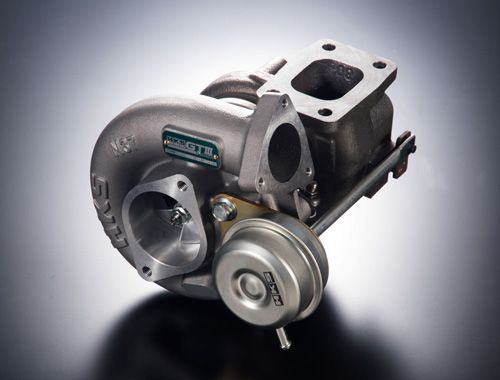 Representative Photo, actual item may vary
HKS Turbocharger Housing: Precision Engineering for Maximum Boost
When it comes to forced induction, few names carry the weight that HKS does. Founded in Japan in 1973, HKS has spent decades developing turbocharger technology that bridges the gap between motorsport performance and street reliability. Their turbocharger housings are a direct expression of that philosophy — components engineered with the same exacting standards that have made HKS turbos a staple in professional motorsport and high-performance builds worldwide.
What Sets HKS Turbocharger Housings Apart
HKS turbocharger housings are designed as integral parts of their broader GT-series and GTIII-series turbocharger systems. Rather than treating the housing as an afterthought, HKS engineers the compressor housing and turbine housing geometry to work in precise harmony with the wheel profiles and bearing assemblies specific to each turbo model. This holistic approach means that an HKS housing isn't just a shell — it is a calibrated flow path that directly influences spool characteristics, peak power output, and thermal management under sustained boost conditions.
The housings are typically produced using high-grade casting processes, with turbine housings built to withstand the extreme heat cycles generated by exhaust gases. Materials are selected for both durability and heat retention properties, ensuring the turbine side maintains efficiency across a wide RPM range. Compressor housings, meanwhile, are shaped to optimize airflow velocity and minimize turbulence before charge air enters the intercooler circuit.
Designed to Integrate with the HKS Ecosystem
One of the practical advantages of sourcing an HKS turbocharger housing is the confidence of direct fitment compatibility within the HKS turbo lineup. Whether you are rebuilding an existing HKS GT or GTIII unit, replacing a damaged housing after a track incident, or upgrading to a larger A/R ratio housing for more top-end power, HKS housings are dimensionally matched to maintain the integrity of the original system design. This matters for tuners who have already mapped and dialed in boost curves around a specific HKS turbo platform — swapping in a properly matched housing avoids the recalibration headaches that can come with mixing and matching aftermarket components.
Who Needs an HKS Turbocharger Housing?
These components are particularly relevant for enthusiasts and professional builders working on platforms where HKS turbos have a long history of proven performance — including popular Japanese sport compact and sports car applications. If you are performing a turbo rebuild, chasing a higher boost ceiling, or repairing a cracked or damaged housing on an existing HKS setup, sourcing a genuine HKS housing ensures you maintain the performance characteristics the original system was designed to deliver.
- Rebuild-grade quality: Maintains original turbo system geometry and flow characteristics
- Heat-resistant construction: Turbine housings engineered for sustained high-temperature operation
- A/R ratio options: Housing selections that influence spool speed and peak power delivery
- System compatibility: Dimensionally matched to HKS GT and GTIII turbocharger families
For enthusiasts serious about their forced induction setup, exploring the full range of HKS performance parts alongside their turbocharger housing options is the best way to ensure every component in the boost circuit is working toward the same performance goal.