


A/C Refrigerant Suction Hose

Universal Air Conditioner HA112282C A/C Suction Line Hose Assembly

 Representative Photo, actual item may vary
Universal Air Conditioner HA11319C A/C Suction Line Hose Assembly

Universal Air Conditioner HA112497C A/C Suction Line Hose Assembly

Universal Air Conditioner HA112384C A/C Suction Line Hose Assembly

Universal Air Conditioner HA111814C A/C Suction Line Hose Assembly

Universal Air Conditioner HA112463C A/C Suction Line Hose Assembly

Universal Air Conditioner HA112477C A/C Suction Line Hose Assembly
 Representative Photo, actual item may vary
Universal Air Conditioner HA112343C A/C Suction Line Hose Assembly

Universal Air Conditioner HA11139C A/C Suction Line Hose Assembly

Universal Air Conditioner HA112408C A/C Suction Line Hose Assembly
 Representative Photo, actual item may vary
Universal Air Conditioner HA111930C A/C Suction Line Hose Assembly


Universal Air Conditioner HA111539C A/C Suction Line Hose Assembly

Universal Air Conditioner HA11261C A/C Suction Line Hose Assembly

Universal Air Conditioner HA111702C A/C Suction Line Hose Assembly

Universal Air Conditioner HA111307C A/C Suction Line Hose Assembly

Universal Air Conditioner HA111496C A/C Suction Line Hose Assembly

Universal Air Conditioner HA111503C A/C Suction Line Hose Assembly

Universal Air Conditioner HA111261C A/C Suction Line Hose Assembly

Universal Air Conditioner HA111734C A/C Suction Line Hose Assembly

Universal Air Conditioner HA11281C A/C Suction Line Hose Assembly

Universal Air Conditioner HA111968C A/C Suction Line Hose Assembly


Universal Air Conditioner HA111240C A/C Suction Line Hose Assembly

Universal Air Conditioner HA112475C A/C Suction Line Hose Assembly

Universal Air Conditioner HA112029C A/C Suction Line Hose Assembly

Universal Air Conditioner HA11299C A/C Suction Line Hose Assembly
 Representative Photo, actual item may vary


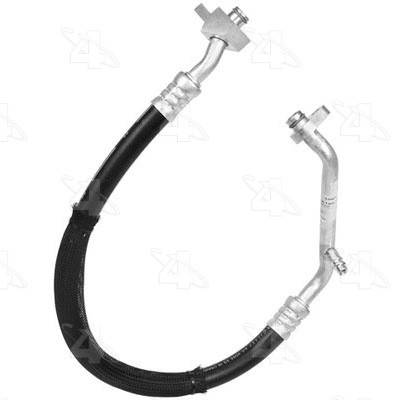 Representative Photo, actual item may vary


 Representative Photo, actual item may vary
 Representative Photo, actual item may vary
Replacement RN50230002 A/C Suction Hose Line Evaporator to Compressor OEM 92480ZT00A

 Representative Photo, actual item may vary
Replacement RC50230003 A/C Refrigerant Suction Hose Compressor to Evaporator 3.6L
What Is an A/C Refrigerant Suction Hose?
The A/C refrigerant suction hose is the unsung workhorse of your vehicle's air conditioning system. Also known as the low-pressure line, return line, or vapor line, it is responsible for one of the most critical legs of the refrigerant cycle: carrying low-pressure refrigerant vapor from the evaporator (or accumulator) back to the compressor, where the cooling process begins again.
Unlike the high-pressure discharge hose, the suction hose operates on the cold side of the system. Because it carries refrigerant vapor and lubricating oil that need room to flow with minimal resistance, the suction hose is typically the largest hose in the A/C circuit. On a functioning system, you'll often notice this line feeling cold to the touch — and even sweating where it lacks insulation — a normal sign that the low-pressure refrigerant inside is doing its job.
How the Suction Hose Fits Into the A/C Cycle
To understand why the suction hose matters, it helps to trace the refrigerant's journey. The compressor pressurizes refrigerant gas and sends it through the discharge hose to the condenser, where heat is released and the refrigerant condenses into a high-pressure liquid. That liquid then travels to an expansion valve or orifice tube, drops in pressure, and enters the evaporator — a small heat exchanger located behind the dashboard. Inside the evaporator, the low-pressure refrigerant absorbs heat from cabin air, turning back into a vapor. The suction hose then conveys that refrigerant vapor back to the compressor to restart the cycle.
In short, without a properly functioning suction hose, the refrigerant cannot complete its loop — and your A/C simply cannot cool the cabin.
Signs Your A/C Suction Hose Needs Replacement
Because the suction hose is made of reinforced rubber (sometimes combined with crimped metal hard lines or aluminum fittings), it is subject to wear, heat exposure, and chemical degradation over time. Knowing the warning signs can save you from a much more expensive repair:
- Weak or no cooling: If your A/C isn't blowing cold air, or is only blowing cold air occasionally, a damaged suction hose could be the culprit.
- Visible cracks, bulges, or oily residue: Physical damage or oily staining near the hose or fittings often signals a refrigerant leak.
- Hissing sounds: A leaking refrigerant hose may produce a faint hissing noise when the A/C system is running.
- Frequent refrigerant loss: If your system needs refrigerant recharges more often than expected, your suction hose may be leaking vapor.
- Inconsistent cabin temperatures: Erratic or fluctuating cooling performance can point to underlying hose issues before a full failure occurs.
What to Look for When Shopping for a Replacement
A/C suction hoses are highly vehicle-specific — connector geometry, hose diameter, and routing all vary by make, model, and year. When selecting a replacement, keep these factors in mind:
- OEM vs. aftermarket: OEM hoses guarantee an exact fit and are engineered to your vehicle's climate control specifications. Quality aftermarket equivalents can offer comparable performance, often at a lower price point.
- Refrigerant compatibility: Ensure the hose is rated for your system's refrigerant, whether that's R-134a or the newer R-1234yf found in many late-model vehicles.
- Material and construction: Look for hoses made with barrier-layer rubber construction designed to resist refrigerant permeation, and metal fittings or crimped connectors for secure, leak-free connections.
- Complete assemblies: Many suction hoses are sold as full assemblies with fittings pre-installed, simplifying the replacement process and reducing the chance of connection errors.
Always replace O-rings and seals whenever installing a new suction hose, and have the system vacuumed and properly recharged by a certified technician after the repair. Handling automotive refrigerant requires EPA certification in many jurisdictions, so consult a licensed professional if you're unsure.