


Battery Temperature Sensor


Xantrex 809-0946 Battery Temperature Sensor for Freedom SW Inverter/Chargers 25ft Cable

 Representative Photo, actual item may vary

 Representative Photo, actual item may vary


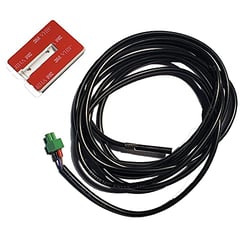
 Representative Photo, actual item may vary


 Representative Photo, actual item may vary
What Is a Battery Temperature Sensor?
The battery temperature sensor is a small but critically important component in your vehicle's electrical system. Located on or near the battery, it continuously monitors the battery's thermal state and relays that data to the vehicle's control module — whether that's the Battery Control Module (BCM) or the Powertrain Control Module (PCM). The charging system then uses this real-time temperature information to dynamically adjust output voltage, ensuring the battery receives exactly the charge it needs — no more, no less.
In practical terms, this means the alternator charges more aggressively when the battery is cold and backs off when temperatures climb. The result is a battery that charges more efficiently, lasts longer, and is protected from the dual dangers of overcharging and undercharging. In hybrid and electric vehicles, the sensor also plays a role in activating cooling fans or other thermal management systems to keep high-voltage battery packs operating safely within their optimal range.
Why Battery Temperature Sensors Matter
Modern vehicles — especially those equipped with start-stop systems, advanced driver-assistance features, and power-hungry infotainment technology — place unprecedented demands on the 12-volt battery. The vehicle's Battery Management System (BMS) depends on accurate temperature data to calculate the battery's state of charge (SOC), its starting ability, and its overall health. Without this input, the BMS is essentially flying blind.
A faulty battery temperature sensor can trigger a cascade of issues. Incorrect temperature readings can cause the system to overcharge or undercharge the battery, leading to erratic electrical performance, engine surging, premature battery failure, and an illuminated Check Engine light. Diagnostic trouble codes such as P0514, P0515, P0516, and P0517 are commonly associated with battery temperature sensor faults in gasoline and diesel vehicles, while hybrid-specific codes like P0A9C through P0ACE point to sensor issues in electrified powertrains.
On vehicles with stop-start functionality, a malfunctioning sensor can disable the system entirely, since the BMS must verify sufficient charge capacity before allowing an engine restart. Contamination from dirt, moisture, or battery acid is among the most common causes of sensor failure — making periodic inspection a smart habit, especially in regions with harsh winters or road salt exposure.
What to Look for When Shopping
- Vehicle fit: Battery temperature sensors are highly vehicle-specific. Always confirm compatibility with your year, make, and model before purchasing.
- OE-equivalent design: Look for sensors that are factory-calibrated to match the original equipment temperature set points for accurate BMS communication.
- Material quality: Sensors built with high-grade materials and robust housings better resist the corrosion and moisture exposure common in the battery tray environment.
- Diagnostic readiness: Replacing a faulty sensor with a properly calibrated unit should clear associated OBD-II codes — verify this after installation using a scan tool.
Top Brands in Battery Temperature Sensors
Standard Motor Products is the leading name in this category, and for good reason. Founded in 1919, the brand has built a reputation as a go-to source for engine management and electrical components, engineering a catalog of over 40,000 automotive parts. Their battery temperature sensors — including the widely used TS-406 and TS-407 — feature factory-calibrated bimetallic contact arms designed to respond precisely to temperature shifts, covering a broad range of domestic applications from Jeep and Dodge trucks to Chrysler passenger cars.