


Spade Terminal


Standard Motor Products HP1740 Handypack Insulated Spade Terminal 16-14 Gauge Blue 65-Pack


Dorman 85423 16-14 Gauge Spade Terminal No. 10 Blue Insulated Electrical Connector


Quickcar Racing Products 57-944 Female Quick Slide Spade Terminal 12-10 Gauge with Heat Shrink Pair



 Representative Photo, actual item may vary


 Representative Photo, actual item may vary

 Representative Photo, actual item may vary

 Representative Photo, actual item may vary
 Representative Photo, actual item may vary
 Representative Photo, actual item may vary
 Representative Photo, actual item may vary
J T & T Products 2350J Heat Shrink Spade Terminal Connector 22-18 AWG #6 Stud Red 10-Pack

 Representative Photo, actual item may vary
 Representative Photo, actual item may vary

 Representative Photo, actual item may vary

 Representative Photo, actual item may vary


The Best Connection 2350J Heat Shrink Spade Terminal 22-18 AWG #6 Stud Red 10-Pack





 Representative Photo, actual item may vary


 Representative Photo, actual item may vary


Ancor 313203 Marine Grade Heat Shrink Spade Terminal #8 Fastener 22-18 AWG Red 3-Pack
Ancor 220313 Marine Grade Nylon Flanged Spade Terminal #10 Stud 16-14 AWG Blue 100-Pack
- 1
- 2
What Are Spade Terminals?
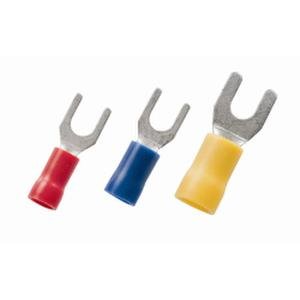
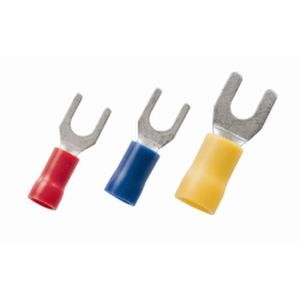
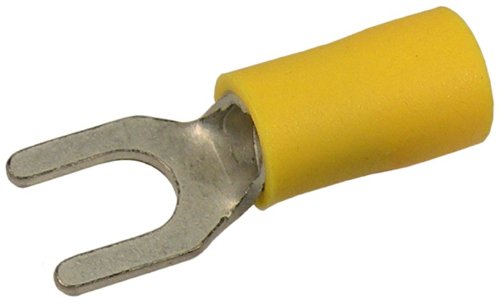
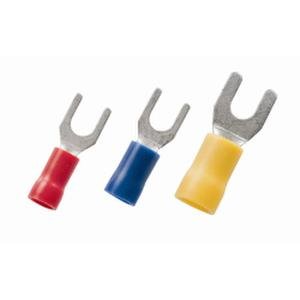
Spade terminals — also known as spade connectors or fork terminals — are among the most fundamental components in any vehicle's electrical system. A spade connector is a type of wire terminal with a flat, fork-shaped end that slides onto a terminal stud or screw, making it easy to connect or remove without tools while still maintaining a stable connection. That combination of simplicity and reliability is what has made them a go-to solution for technicians and enthusiasts alike.
How Spade Terminals Work
Spade terminals allow you to connect electrical wires quickly, because screws and bolts only require loosening — instead of complete disassembly — when attaching or removing a connection. Thanks to their quick connect and disconnect design, spade connectors allow fast installation and easy removal, making them ideal for applications that require frequent maintenance, inspection, or system upgrades.
Most spade electrical connectors are manufactured from high-conductivity materials such as copper or brass, and many feature tin-plated or gold-plated finishes, which improve corrosion resistance and maintain signal integrity over time.
Types of Spade Terminals
Spade terminals come in various types to accommodate different applications, including insulated, non-insulated, and quick connect spade terminals — each offering specific advantages such as resistance to heat and moisture, making them suitable for various automotive environments.
- Insulated spade terminals are particularly useful in environments where moisture is a concern, as they are enveloped in a protective cover that inhibits moisture infiltration that can result in corrosion or short circuits.
- Non-insulated variants are more adaptable but need careful consideration regarding the environment in which they are used.
- Quick connect spade terminals facilitate rapid attachments — an indispensable feature during emergency repairs or frequent component changes.
- Locking spade terminals are designed to prevent disconnection in vibration-prone environments.
Where Are Spade Terminals Used?
Spade connectors are extensively used in automotive electrical systems, and can be found in connections between wires and various components such as batteries, starter motors, alternators, ignition systems, and headlights. Beyond vehicles, common applications span automotive wiring harnesses, car audio, household appliances, industrial control panels, and even marine and outdoor environments where waterproof spade connectors resist corrosion.
Choosing the Right Spade Terminal
Selecting the appropriate connector based on wire gauge, usage environment, and performance requirements helps prevent issues such as loose connections, corrosion, or downtime, ensuring optimal operation. Key factors to evaluate include:
- Wire gauge compatibility — always match the terminal's barrel size to your wire's AWG rating
- Tab/blade size — common sizes include 3/16", 1/4", and 5/16" to suit different studs and component terminals
- Insulation type — choose between vinyl, nylon, or heat-shrink insulation based on temperature and moisture exposure
- Termination method — crimping is the most common approach, though soldering or a crimp-plus-solder hybrid offers maximum strength in critical systems
Featured Brand: Hella
Hella is a globally recognized automotive lighting and electronics manufacturer with deep roots in OEM electrical components. Their spade terminals are engineered to meet the precise tolerances demanded by automotive wiring systems, and are available in a range of tab sizes and configurations — including female crimp terminals in standard 4.3 mm and 6.3 mm formats — to ensure a secure, consistent connection across a wide variety of vehicle applications.