



 Representative Photo, actual item may vary

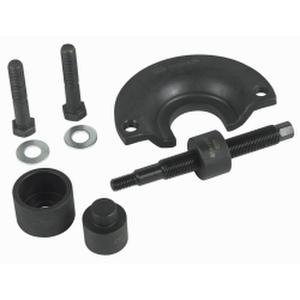 Representative Photo, actual item may vary


The Heart of Your Engine's Cooling System
Few components are as quietly critical to engine health as the water pump and its supporting parts. The water pump is responsible for keeping coolant constantly circulating through the engine block, cylinder heads, heater core, and radiator — a non-stop loop that prevents the heat generated by combustion from turning into catastrophic engine damage. Without a functioning water pump, even a brief drive can result in overheating, warped cylinder heads, or a seized engine.
Understanding how the water pump fits into the broader cooling system — and what components work alongside it — makes it easier to diagnose problems, plan preventive maintenance, and choose the right parts when it's time for a repair.
How the Water Pump Works
At its core, the water pump uses a spinning impeller to generate centrifugal force that pushes coolant through the system. The impeller receives its drive from the engine itself — typically via a serpentine belt, timing belt, or timing chain connected to the crankshaft. As long as the engine is running, the pump is working, circulating coolant through the engine's passages to absorb heat and carry it to the radiator for dissipation.
Modern engines typically operate between 195°F and 220°F. The water pump plays a key role in keeping temperatures within this precise range, working in tandem with the thermostat, which regulates how much coolant flows into the system based on current engine temperature.
Key Components in This Category
This category covers the full spectrum of water pump hardware and related parts, including:
- Water Pumps — The core unit, available in mechanical (belt-driven) and electric configurations. Electric water pumps, increasingly common in hybrid and high-performance applications, allow for precise coolant flow control and reduce parasitic engine load.
- Water Pump Gaskets & Seals — These components form a leak-proof barrier between the pump housing and the engine block. Worn or degraded gaskets are one of the most common causes of coolant leaks and should be replaced any time the pump is serviced.
- Water Pump Pulleys — The pulley transfers power from the drive belt to the pump's bearing shaft. Pulleys must be precisely sized for the application, as even minor dimensional differences can cause fitment issues, noise, or premature bearing wear.
- Impellers — The rotating component inside the pump that drives coolant flow. Impeller condition directly affects coolant volume and pressure throughout the system. Plastic impellers can corrode or crack over time, reducing pump efficiency.
- Water Pump Hardware Kits — Mounting bolts, studs, and fastener kits engineered to proper torque specifications for a secure, leak-free installation.
- Auxiliary Water Pumps — Secondary electric pumps found in many modern vehicles that support coolant flow to specific areas such as the turbocharger, heater core, or transmission cooler.
- Inlet Tubes, Adapters & Block-Off Plates — Supplemental plumbing and fitment components used during installation, engine swaps, or system modifications.
When to Service the Water Pump System
Water pump failure typically manifests as coolant leaks near the front of the engine, a rising temperature gauge, grinding or whining noises from the pump area, or visible coolant residue around the weep hole. Because the water pump often shares its service interval with the timing belt, many mechanics recommend replacing both simultaneously to avoid paying for overlapping labor twice. Most water pumps reach the end of their service life somewhere between 60,000 and 100,000 miles, though this varies widely by vehicle and operating conditions.
Keeping an eye on the entire water pump assembly — not just the pump itself — is the best way to stay ahead of cooling system failures. Fresh gaskets, a properly tensioned drive belt, a clean impeller, and a functional pulley all work together to ensure reliable coolant circulation mile after mile.